
The Art of Synchronicity: Sophisticated Jet Lag Prevention Tips for the Discerning Traveller in 2026
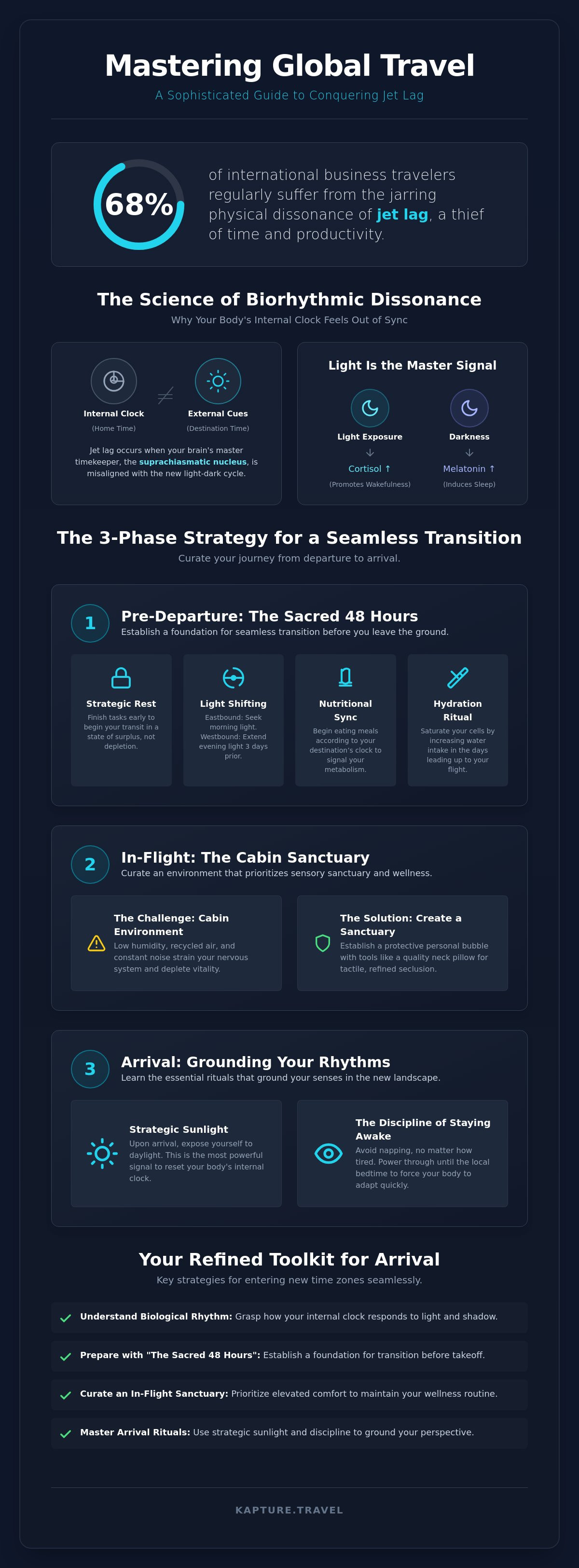
Recent data indicates that 68% of international business travelers regularly suffer from the jarring physical dissonance of jet lag. It is a quiet thief of time, stealing the first golden hours of a journey and replacing them with a dull, heavy fog that fractures even the most disciplined wellness routines. You likely know the feeling of standing in a sun-drenched plaza while your body remains anchored to a time zone thousands of miles away. This guide offers sophisticated jet lag prevention tips designed to bridge that gap, transforming the chaos of transit into a curated transition of light and rhythm.
We believe that travel should be an art form, not a test of endurance. You understand that maintaining a sense of style and physical sanctuary is as vital as the destination itself. Our promise is to help you master the rhythm of global travel through a curated approach to circadian alignment and sensory sanctuary. We will explore how to use timed light exposure and science-backed tools like the BioNTex™ Travel Neck Pillow Set to preserve your perspective. By the end of this narrative, you will possess a refined toolkit for entering new time zones seamlessly, ensuring you arrive refreshed and ready for discovery.
Key Takeaways
- Understand the biological rhythm of travel and how your internal clock responds to the delicate play of light and shadow.
- Prepare your body with the "Sacred 48 Hours" strategy, establishing a foundation for seamless transition before you ever leave the ground.
- Curate an in-flight environment that prioritizes sensory sanctuary, utilizing sophisticated jet lag prevention tips to maintain your wellness routine through elevated comfort.
- Learn the essential arrival rituals that ground your perspective, from strategic sunlight exposure to the discipline of staying awake.
- Discover how the fusion of innovative textile technology and mindful exploration creates a lasting legacy for the modern traveler.
Understanding the Biorhythmic Dissonance of Long-Haul Travel
To travel is to transcend boundaries, yet our biology often remains tethered to the soil we left behind. Jet lag is more than a mere inconvenience; it's a profound misalignment between the internal biological clock and the destination time. This dissonance occurs when your body's rhythm, calibrated to a specific longitude, fails to synchronize with the sudden shift of a long-haul flight. Utilizing effective jet lag prevention tips requires an understanding that the first 24 hours in a new city are a liminal space, a blurred threshold that demands intentional curation to avoid a total loss of productivity.
At the heart of this experience lies the suprachiasmatic nucleus, a tiny cluster of cells in the brain that acts as our master timekeeper. This biological clock relies on external light signals to dictate our cycles of alertness and rest. When we traverse time zones, particularly during eastward travel where the day is compressed, the brain struggles to advance its internal clock. By Understanding Jet Lag through the lens of circadian biology, we can begin to harmonize our physical presence with our geographic location.
To better understand this concept, watch this helpful video:
The Circadian Narrative: Why Your Body Feels Out of Sync
Light exposure is the primary brushstroke that paints our daily rhythm, triggering the delicate rise of cortisol to wake us and the soft release of melatonin to invite sleep. When these signals are disrupted by rapid transit, we experience a jarring sensory fracture. This is often compounded by social jet lag, where the demands of our itinerary clash with our natural chronotype. Circadian rhythm is the internal conductor of your biological orchestra.
The Physical Toll of High-Altitude Transit
The cabin environment presents its own set of challenges, where low humidity and recycled air can deplete your vitality before you ever touch the tarmac. The sensory overload of crowded terminals and the constant hum of engines place a significant strain on the nervous system. To counter this, many discerning travelers seek to create a protective personal bubble. Incorporating the BioNTex™ Travel Neck Pillow Set provides a tactile sanctuary, offering both physical support and a sense of refined seclusion amidst the chaos of high-altitude transit. These subtle adjustments are essential jet lag prevention tips for those who value arriving with their composure and style intact.
Pre-Departure: The Art of Anticipatory Adjustment
The journey doesn't begin at the boarding gate. It starts in the quiet, deliberate moments of the Sacred 48 Hours. Treat these two days before takeoff as a sanctuary of rest. Most travelers arrive at the airport already depleted by the departure frenzy of last-minute packing and work deadlines. By finishing your tasks early, you ensure your body begins the transit in a state of surplus. This period is the canvas upon which your recovery is painted. These anticipatory jet lag prevention tips transform the chaos of travel into a disciplined choreography.
Light is the most powerful tool in your kit. Three days prior to departure, begin the process of strategic light shifting. If you're heading east, seek bright morning light and dim the lamps earlier in the evening. For westward journeys, extend your evening light exposure. This mimics the destination's rhythm before you've even left home. Complement this with nutritional synchronicity. Start eating your meals according to your destination’s clock. If it’s breakfast time in London while you’re in New York, choose a light, protein-rich meal to signal to your metabolism that the day has begun.
Hydration should be treated as a ritual. Don't wait until you're in the dry cabin air to start drinking water. Saturate your cells in the days leading up to the flight. This preparation creates a physical resilience that makes Harvard's jet lag prevention tips significantly more effective.
Shifting the Clock: A Three-Day Protocol
Eastward travel asks your body to lose time; this is biologically more taxing. Advance your bedtime by 30-minute increments each night. Use high-intensity light boxes or simply spend time in direct sunlight upon waking to reset the internal clock. Conversely, for westward travel, push your sleep later. This gradual adjustment softens the blow of geographic displacement, turning a jarring shift into a gentle slide.
Curating Your Departure Mindset
Your mental state dictates your physical response. Visualizing your arrival, such as seeing yourself walking through a Parisian market or a Tokyo garden, reduces the cortisol spikes associated with travel anxiety. A meticulous departure checklist serves as a cognitive anchor, ensuring nothing is left to chance. For a deeper dive into this ritual, explore The Art of Departure: A Sophisticated Travel Preparation Checklist for 2026. To carry your essentials with the same intentionality, consider the BioNTex™ Travel Neck Pillow Set to begin your comfort ritual even before you leave for the terminal.
The Cabin Sanctuary: Curating Your In-Flight Environment
Once the cabin doors seal, the aircraft becomes a vessel suspended between worlds. It's a space where you can either surrender to the clinical coldness of transit or curate a private wellness retreat. While many focus solely on biological hacks, the tactile environment is the anchor that holds your physical state together. Transforming your seat into a sensory sanctuary is one of the most overlooked jet lag prevention tips, yet it's the difference between arriving depleted or composed.
Managing the atmosphere requires a disciplined approach to sound and light. High-fidelity noise-canceling headphones and a weighted silk mask create a personal darkroom, shielding your nervous system from the rhythmic hum of the engines and the intrusive flicker of seatback screens. Strategic napping is equally vital; embrace sleep only when it aligns with your destination's night, and stay vigilant when the sun should be rising at your arrival point. This intentionality ensures you aren't just passing time, but actively preparing for your new reality.
Ergonomic Elegance: The Role of the Travel Pillow
Proper neck alignment is the silent guardian of restorative rest. Without it, the body suffers from micro-awakenings, those sharp, jarring moments when your head slips and your deep sleep cycle fractures. The BioNTex™ Travel Neck Pillow Set provides the structural integrity needed to maintain a serene posture. There is an evocative feeling in being captured by a soft, protective cocoon that supports the weight of your journey. It allows you to drift into a deeper state of repose, ensuring that when you wake, your muscles are as refreshed as your mind.
Hygiene as a Wellness Pillar
The psychological benefit of feeling clean and protected in a shared space cannot be overstated. In the close quarters of a long-haul flight, your personal bubble is your only true territory. Advanced BioNTex™ technology serves as an invisible layer of protection, utilizing treated fabrics to guard against germs and bacteria that often thrive in recycled cabin air. Anti-viral and anti-bacterial fabrics elevate the peace of mind for the modern explorer, allowing you to settle into your surroundings without the lingering anxiety of environmental stressors. This sense of sanctuary is a fundamental pillar of sophisticated jet lag prevention tips, where health and comfort are treated as inseparable luxuries.
Arrival Rhythms: Grounding Your Senses in a New Landscape
Touchdown is more than a logistical success; it's a sensory rebirth. As you step onto the tarmac, the air carries a new weight and the light hits the horizon at an unfamiliar angle. This is the critical window for grounding your senses. Instead of retreating to the dim shadows of a hotel room, seek the sun immediately. These essential jet lag prevention tips focus on the immediate 12 hours post-landing, where your body is most plastic and ready to be reshaped by the local environment. Seek the sun. Let the photons recalibrate your master clock through the simple act of observation.
Resisting the siren call of the afternoon nap is your greatest challenge. That heavy, velvet fatigue feels like a necessity, yet it's a biological trap that anchors you to a time zone thousands of miles away. If you surrender now, you prolong the dissonance. Instead, engage in the "First Dinner" ritual. Aligning your digestion with the local clock is as vital as light exposure. By dining at the local hour, you signal to your metabolic system that the transition is complete. It's a rhythmic commitment to your new location.
Light as the Primary Lens of Recovery
Morning light is the conductor for eastward recovery, advancing your clock to meet the early dawn. It's a sharp, blue-rich light that clears the fog of transit. Conversely, if you've traveled west, linger in the golden hour of sunset to delay your internal rhythm. Be wary of the blue light from your devices on that first night; it acts as a false dawn that can fracture your first true sleep in the new landscape. Keep your environment dim as the local evening descends to invite natural melatonin production.
Movement and Metabolic Reset
Circulation is the engine of recovery. A low-intensity walk through a local gallery or a quiet park wakes the senses without overtaxing the nervous system. Avoid the temporary crutches of heavy caffeine or alcohol during these first 24 hours. They only mask the exhaustion rather than resolving the underlying rhythm. Use temperature as a signal; a cold shower upon arrival can stimulate alertness, while a warm soak before bed prepares the body for deep, restorative rest. To ensure you have all your recovery essentials close at hand for these first vital hours, consider the refined organization of the BioNTex™ Travel Neck Pillow Set and its accompanying storage solutions.
The Kapture Philosophy: Elevating the Journey through Innovation
The final transition in any journey is the one that happens within. Beyond the biological shifts and the tactical maneuvers of light exposure, there is a deeper layer of travel: the philosophy of how we move through the world. True exploration shouldn't be a battle for survival against the clock. It should be a state of thriving, where every moment is framed with the clarity of a well-composed photograph. These jet lag prevention tips are the technical settings that allow you to capture the true essence of a destination without the blur of exhaustion. By treating your transit as a period of intentional rest, you preserve the soul of the journey.
Curated gear acts as a vital bridge between the familiar comforts of home and the raw excitement of foreign discovery. This is the intersection where sustainability meets technology and aesthetic beauty. High-quality accessories aren't just luxuries; they are the tools of an artistic legacy, ensuring that the stories you bring back are vibrant and clear. When you invest in your physical state during transit, you're making a commitment to the quality of your experiences. Every journey deserves to be remembered with a sense of wonder rather than a fog of fatigue.
Sustainable Sophistication in Travel Gear
In a world of fast-paced consumption, choosing gear with a soul is a radical act of refinement. The Kapture sustainability mission is rooted in the belief that travel should leave a mark on the traveler, not the planet. By utilizing upcycled materials and prioritizing enduring quality, we ensure that your journey is as responsible as it is beautiful. This fusion of style and function is most evident in our curated collaborations. The Moomin collection brings a sense of nostalgic wonder to the cabin, while the Mogols series offers a modern, artistic perspective on transit. Choosing durable, high-quality gear is a commitment to the planet and a testament to your personal aesthetic.
Your Sanctuary Awaits: Building the Ultimate Kit
To master the art of synchronicity is to build a kit that serves your senses. From the pre-departure rituals of light shifting to the arrival rhythms of grounding, every choice you make is a brushstroke on the canvas of your trip. View your travel accessories not as mere items in a bag, but as essential instruments for "capturing" better experiences. When you possess the right sanctuary, the distance between time zones disappears, leaving only the pure resonance of the journey. To begin your next chapter with unparalleled grace, Explore the BioNTex™ Travel Neck Pillow Set and redefine your transit. Arrive not just on time, but in a state of quiet elegance and renewed perspective.
Master Your Global Rhythm
The transition between time zones is no longer a jarring fracture, but a seamless slide into a new landscape. We have explored the discipline of the Sacred 48 Hours and the vital role of light as the conductor of your internal orchestra. By grounding your senses through intentional arrival rituals and metabolic resets, you ensure that the soul of your journey remains intact. These sophisticated jet lag prevention tips move you beyond mere survival, allowing you to inhabit every new city with the clarity and presence it deserves.
Your sanctuary doesn't have to end at the cabin door. By choosing gear that marries innovation with aesthetic beauty, you carry a piece of home with you. BioNTex™ anti-viral technology and eco-friendly upcycled fabrics provide an invisible layer of protection and peace of mind, while a sophisticated, ergonomic design supports your physical resilience. Elevate your sanctuary with the BioNTex™ Travel Neck Pillow Set and redefine the way you move through the world. Step forward with confidence, knowing that your next great discovery is waiting for you in a state of perfect synchronicity.
Frequently Asked Questions
Does melatonin actually help with jet lag prevention?
Yes, low-dose melatonin between 0.5 and 3 mg is a validated tool for managing circadian shifts, particularly during eastbound travel. The CDC’s 2026 Yellow Book highlights its efficacy while noting that because it's not FDA-regulated, the actual dosage can vary from the label. It functions as a chemical signal to the brain that the day has ended, helping to advance or delay your internal rhythm as needed.
How many days does it typically take to recover from an 8-hour time shift?
Without intervention, the body typically requires one day of adjustment for every time zone crossed. For an 8-hour shift, this could mean a full week of lingering fatigue. However, utilizing science-based jet lag prevention tips can significantly compress this timeline. By strategically managing light and sleep before you arrive, you can often synchronize with your new landscape in just two or three days.
Is it better to stay awake or sleep during a long-haul flight?
You should align your in-flight rest with the current time at your destination. If it's night at your arrival point, prioritize sleep to begin the synchronization process early. If it's daylight there, remain vigilant and engaged. This intentional use of your transit time prevents the jarring disorientation that occurs when you arrive at dawn having just finished a full night of rest on the plane.
Can certain foods help reset my internal body clock?
While light remains the primary conductor of your rhythm, meal timing acts as a powerful secondary signal to your metabolic system. High-protein meals in the morning can stimulate alertness by aiding dopamine production, while high-carbohydrate dinners encourage the onset of sleep. Aligning your first meal with the local breakfast hour is one of many effective jet lag prevention tips for resetting your internal metabolic clock.
Why is eastward travel generally harder on the body than westward travel?
Eastward travel is more taxing because it requires the body to advance its internal clock, essentially "losing" time. It's biologically easier for the human circadian rhythm to delay itself, as seen in westward journeys, than to compress its cycle. This is why travelers often feel a more profound sense of physical dissonance when flying from New York to London than on the return journey.
How does hydration impact the severity of jet lag symptoms?
Hydration doesn't directly shift your circadian clock, but it significantly mitigates the physical discomfort associated with geographic displacement. The dry, pressurized cabin environment can exacerbate fatigue and cognitive fog, making the mental effort of adjustment much harder. Maintaining cellular saturation ensures your body has the resilience needed to respond to the more critical signals of light and movement.
Are there specific light-therapy glasses that work for jet lag?
Specialized light-filtering and light-emitting glasses are increasingly used to precisely control the photons reaching the retina. Systems like Flykitt utilize these tools alongside AI-driven apps to deliver specific wavelengths at calculated intervals. These devices offer a polished, technical approach to light management, allowing travelers to maintain their rhythm even when natural sunlight is unavailable or poorly timed for their specific adjustment protocol.
What is the best way to keep children on a sleep schedule during travel?
Maintaining a child’s sleep schedule requires a gentle but firm mimicry of the destination’s light and dark cycles. Begin adjusting their routine in small increments several days before the journey to soften the transition. Focus on creating a portable sensory sanctuary with familiar tactile comforts, which helps ground their nervous system and reduces the emotional volatility often triggered by the disruption of their carefully curated routines.
