
The Art of Conscious Discovery: A Guide to Travel Gear Made from Recycled Materials in 2026
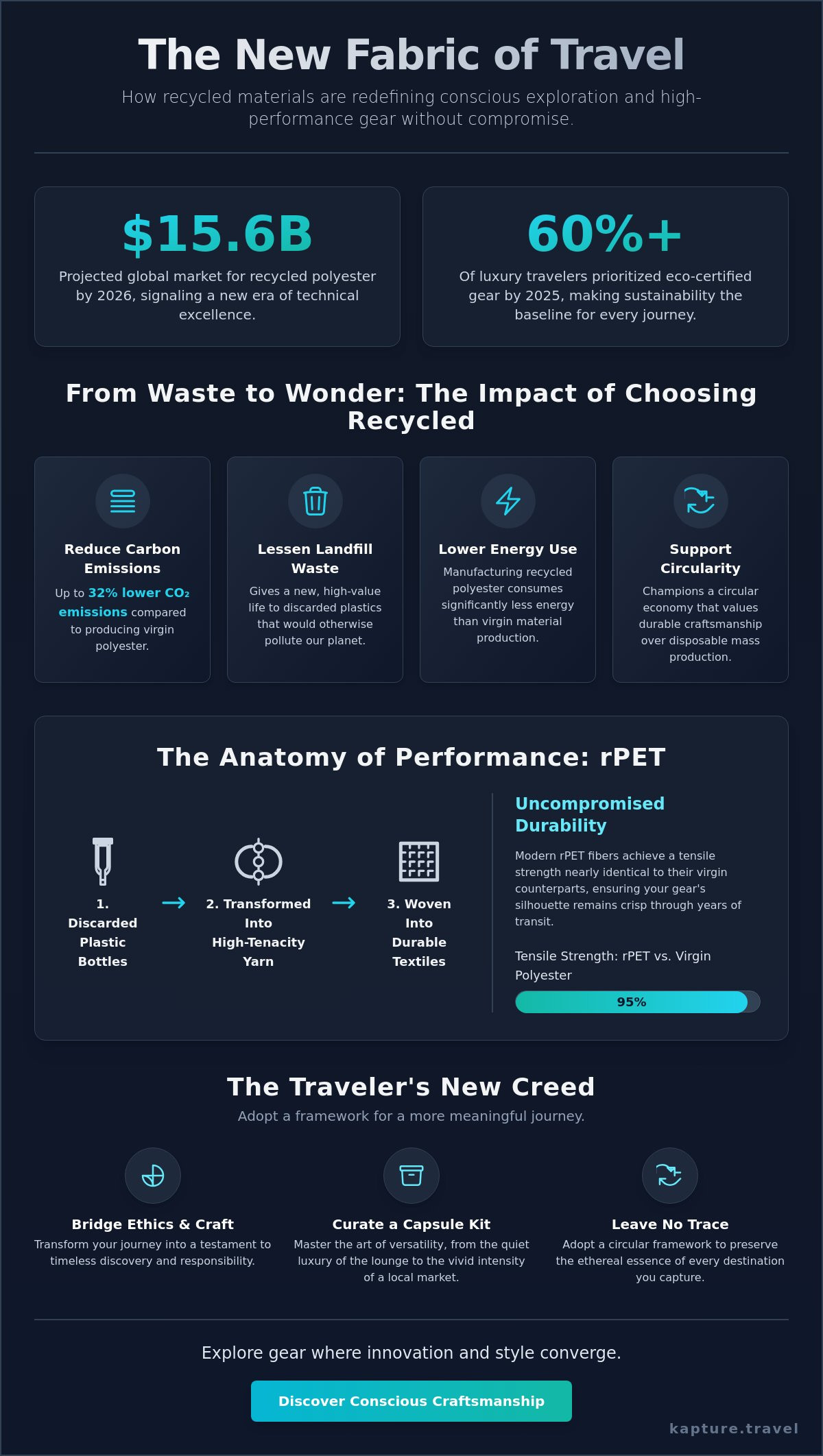
What if the very fabric of your journey was woven from the remnants of the world you seek to preserve? For years, the choice between high-performance aesthetics and environmental stewardship felt like a compromise; yet by 2026, the global market for recycled polyester is projected to reach 15.6 billion dollars, signaling a new era of technical excellence. You've likely felt the sting of greenwashing or the disappointment of a bag that loses its shape after a single season. It's a common frustration to find that travel gear made from recycled materials often prioritizes the "eco" label over the actual endurance required for a life in motion. You deserve a kit that feels like a bespoke extension of your own narrative, one that captures the light as beautifully as it protects your most precious lenses.
We agree that a true traveler shouldn't have to choose between a refined silhouette and a clear conscience. This guide will show you how to curate a sophisticated travel kit using upcycled materials that offer the technical performance of virgin synthetics without the ecological cost. We'll explore the elite artisans and innovative brands redefining the essence of the modern voyage through timeless, durable craftsmanship.
Key Takeaways
- Learn to bridge the gap between ethical responsibility and refined craftsmanship, transforming your journey into a testament to timeless discovery.
- Discover the technical resilience and bespoke feel of rPET fabrics, proving that high-performance travel gear made from recycled materials can be both durable and elegantly understated.
- Master the art of curating a versatile capsule kit that transitions seamlessly from the quiet luxury of an airport lounge to the vivid intensity of a local encounter.
- Adopt a circular packing framework designed to help you leave no trace while capturing the ethereal essence and visual narrative of every destination.
- Explore the Kapture philosophy of conscious design, where innovation and style converge to create gear that serves as a lasting artistic legacy for the discerning traveler.
The Soul of Sustainable Travel: Why Recycled Materials Matter
In 2026, the discerning explorer views their equipment as more than a checklist of utilities; it's a statement of intent. The rise of travel gear made from recycled materials represents the quiet intersection of ethical responsibility and refined craftsmanship. We've moved beyond the era of disposable nylon and short-lived plastics. Today, the essence of luxury lies in the timeless nature of upcycled materials that carry a story within their fibers. It's a shift from the temporary to the permanent.
Carrying a piece of equipment that possessed a previous life creates a profound emotional resonance. It's about a future purpose. When you hold a bespoke bag or a sensory wrap, you're holding a transformed narrative. This evolution marks a departure from the use and discard culture that dominated the early 2000s. By 2025, industry reports showed that over 60% of luxury travelers prioritized eco-certified gear. Sustainability isn't a luxury anymore. It's the baseline for every meaningful journey.
To better understand how these narratives are woven into the products we carry, watch this exploration of innovative design:
From Waste to Wonder: The Narrative of Upcycling
Upcycling is an artistic elevation that transcends basic utility. While a standard Textile recycling process often breaks materials down to their base components, upcycling preserves the character of the original source. This process creates a unique, non-replicable texture in travel accessories. No two pieces are identical. The traveler becomes a curator of these transformed histories, selecting travel gear made from recycled materials that mirrors the depth of the landscapes they seek to frame. It's about the soul of the object.
Preserving the Vantage: Protecting the Destinations We Love
Our presence in a destination should be as light as the morning mist. Choosing recycled gear is a silent promise to the future. It's about protecting the ethereal landscapes we travel to capture. Research indicates that using recycled polyester can reduce carbon emissions by up to 32% compared to virgin polyester. This commitment to the planet is central to Kapture's commitment to sustainability, ensuring that the vistas we admire today remain vibrant for the next generation. Every conscious choice preserves the light. It keeps the frame clear for those who follow.
- Reduction of landfill waste through creative reuse.
- Lower energy consumption during the manufacturing phase.
- Support for circular economies that value craftsmanship over mass production.
The Anatomy of Recycled Fabrics: Performance and Protection
The fabric of a journey is woven from more than just memory. It is found in the tactile reality of the gear we carry. Modern rPET, or recycled Polyethylene Terephthalate, represents a sophisticated alchemy that transforms discarded water bottles into high-tenacity yarns. This isn't merely a second life for plastic; it is an elevation of form. Many travelers once feared that choosing sustainable luggage brands meant sacrificing the bespoke texture of virgin silk or premium nylon. In 2026, that narrative has shifted. Today's recycled textiles offer a hand-feel that is indistinguishable from traditional luxury materials, possessing a matte depth and a structural integrity that captures the light with quiet grace.
While traditional petroleum-based nylon has long been the industry standard, recycled rPET fibers now achieve a tensile strength within 5 percent of their virgin counterparts, ensuring that a bag's silhouette remains crisp through years of transit. This resilience is the foundation of travel gear made from recycled materials. We are entering an era of Protective Sustainability. Here, the essence of the fabric does more than shield the contents; it safeguards the traveler. It is a fusion of ecological stewardship and advanced health-conscious engineering that defines the modern vantage point of discovery.
The BioNTex™ Intersection: A New Lens on Safety
True luxury in a post-pandemic world is the peace of mind found in safety. This is where BioNTex™ technology enters the frame. By integrating this anti-viral treatment directly into the recycled fibers, the gear becomes an active shield. It isn't a temporary coating. Instead, it is a permanent bond that reduces viral loads by 99 percent within minutes of contact. This technical synergy means your travel kit isn't just carrying your story; it is protecting your health. It is the ultimate luxury for the modern curator who values both the planet and personal well-being.
Durability in the Frame: Testing Gear for the Long Journey
Engineering travel gear made from recycled materials requires a commitment to the long view. These pieces undergo rigorous abrasion testing to ensure they survive the friction of overhead bins and the grit of cobblestone streets. Water resistance is no longer an afterthought. Modern upcycled bags utilize non-toxic, PFC-free coatings that allow rain to bead and roll away like morning mist. High tear strength is achieved through specific weaving patterns, such as ripstop, which prevents small snags from becoming catastrophic failures.
- Material Integrity: rPET fibers are tested for colorfastness against UV exposure.
- Weatherproofing: Hydrostatic head ratings for recycled shells now often exceed 10,000mm.
- Reinforcement: Stress points are double-stitched with recycled bonded nylon thread.
A high-quality upcycled travel bag is not a temporary purchase, but a timeless companion designed to outlast the very trends that birthed it. For those seeking to deepen their commitment to this aesthetic, exploring our sustainability ethos reveals how these materials are curated for a lifetime of discovery.
Curating Your Sustainable Travel Kit: Essential Gear for 2026
Building a travel kit is an exercise in composition. It requires a discerning eye to select pieces that balance utility with a poetic sensibility. In 2026, the sophisticated traveler looks beyond the surface. They seek a capsule collection where every item tells a story of renewal. Selecting travel gear made from recycled materials isn't merely a logistical choice; it's a commitment to a more conscious narrative. Every object in your bag should transition effortlessly from the quiet sanctuary of an airport lounge to the vibrant energy of a local market encounter. This versatility ensures you carry less while experiencing more.
The tactile experience defines the quality of your transit. On a long-haul flight, the texture of your gear becomes your immediate environment. You deserve materials that feel soft, breathable, and intentional against your skin. High-performance textiles derived from post-consumer waste now rival the finest silks and linens in their hand-feel. This sensory connection transforms a grueling journey into a moment of refined comfort. To begin your curation, Explore the BioNTex™ Travel Neck Pillow Set, a centerpiece of modern, sustainable design.
The Foundation: Sustainable Neck Pillows and Comfort
The neck pillow is the most intimate companion for any long-distance voyager. It's the only piece of gear that maintains constant contact with your skin for hours. Traditional pillows often rely on virgin petroleum-based foams that off-gas chemicals. By 2026, the industry has shifted toward upcycled memory foam. These alternatives repurpose high-density offcuts from premium mattress production, offering superior ergonomic support without the environmental cost. This choice reduces the demand for new plastic production, which currently accounts for roughly 6% of global oil consumption.
Artistry and ethics converge in specialized collections. The Moomin series brings a sense of nostalgic wonder to your kit, while the Mogols collaboration showcases how artistic expression can elevate sustainable materials. These pieces serve as a soft vantage point from which to view the world as you drift across time zones.
The Vessels: Recycled Backpacks and Foldable Bags
Your backpack is the frame that holds your creative essentials. It must be rugged enough for the wild yet polished enough for a gallery opening. Modern travel gear made from recycled materials utilizes rPET fabrics derived from ocean-bound plastics. These textiles are exceptionally durable and water-resistant. A well-designed recycled backpack provides a secure, cushioned environment for your camera bodies and lenses, ensuring your tools for capturing light are always protected.
- Foldable eco-bags: These lightweight vessels are essential for spontaneous discoveries. They tuck away into a pocket until you find a local treasure or a fresh market haul.
- Transitional aesthetics: Choose muted, earth-toned palettes that allow your gear to blend into both urban architecture and natural landscapes.
- Modular interiors: Look for bags with adjustable dividers made from recycled felt to organize your tech and personal items with precision.
By selecting gear that serves multiple purposes, you reduce the weight of your footprint. A single, high-quality recycled bag can replace three specialized carriers, streamlining your silhouette and your soul.
The Discerning Traveler's Guide to Impactful Packing
Packing is more than a logistical necessity; it's the opening scene of a cinematic journey. It requires a deliberate hand and a curated eye. To pack with a circular mindset is to honor the world you're about to witness. This five-step framework ensures your presence is felt through your stories, not your footprint.
- Curate the Narrative: Select pieces that transcend seasons. Every item should possess a timeless aesthetic and a functional soul.
- Audit the Origin: Prioritize travel gear made from recycled materials. High-performance fabrics crafted from ocean-bound plastics or post-consumer waste offer a second life to discarded resources while maintaining a premium feel.
- Calibrate for Weight: A lighter load is a lighter impact. Industry data from 2025 indicates that reducing luggage weight by just 3 kilograms can decrease transport-related carbon emissions by up to 2% on mid-range flights.
- Embrace Technical Versatility: Choose recycled fibers that require 50% less washing through advanced antimicrobial properties and moisture-wicking weaves.
- The Art of Departure: Practice a refined exit. This involves leaving no trace of your transit while carrying the essence of the culture within you. Review The Art of Departure: A Sophisticated Travel Preparation Checklist to refine your ritual.
Lightness of Being: The Benefits of Minimalist, Eco-Friendly Packing
There's a quiet elegance in an uncluttered suitcase. Modern travel gear made from recycled materials utilizes advanced weaving techniques that shed unnecessary bulk. Regenerated nylon, for instance, offers the same tensile strength as virgin fibers but at a fraction of the weight. This reduction in physical strain allows for more effortless movement through crowded terminals or ancient cobblestone streets. It creates a sense of ethereal freedom. You move with the wind, not against it. By selecting versatile apparel that resists wrinkles and odors, you cultivate a bespoke wardrobe that stays fresh, allowing you to focus on the frame through your lens rather than the chores of the road.
Beyond the Gear: A Holistic Approach to Sustainable Travel
True luxury lies in the preservation of the world's most delicate vantages. Your choice of gear is merely the prologue. A holistic journey involves partnering with destinations that prioritize artistic preservation and ecological health. Seek out boutique stays that utilize 100% renewable energy or support local craftsmanship. The curation of your journey often begins at a Modern Travel Supplies Specialty Store, where experts help you select tools that align with your values. These spaces serve as galleries for the soul of travel, showcasing items that are as beautiful as they are responsible. It's about finding the perfect balance between the raw excitement of the unknown and the polished refinement of a conscious life.
Kapture: A Narrative of Conscious Craftsmanship
Kapture lives at the intersection where innovation, sustainability, and style converge. It's a space defined by purpose. Our narrative began in 2020 during a time of global reflection. This period served as a catalyst for conscious design; it forced us to look at the materials we use through a sharper lens. We realized that travel gear made from recycled materials could be both a tool for discovery and a tribute to the planet. We invite you to step into the role of a Kapture Traveler. You're someone who observes the world with depth. You act with intention. You understand that the objects we carry are extensions of our values.
The Bespoke Experience of Protection
Every piece of Kapture gear acts as a sacred element of the travel experience. It protects the traveler while honoring the environment. We apply meticulous attention to every upcycled stitch, transforming what was once waste into a bespoke artifact. This craftsmanship ensures that your journey is supported by gear that feels as refined as it is responsible. Our collections are available at premium locations like LOG-ON and the HKTDC Design Gallery. These partners share our vision for a world where luxury and ethics are inseparable. We believe that protection shouldn't be purely functional; it should be an aesthetic promise to the landscapes we visit.
Capturing the Future: Our Ongoing Commitment
Looking toward the future of 2026, the potential for upcycled materials in travel gear is limitless. Kapture promises to lead this movement. We’ll continue to curate journeys that are as stylish as they are sustainable, ensuring that every vantage point you reach is preserved for the next generation. Our commitment is to the frame, the light, and the enduring soul of the places we visit. We don't just create products; we curate a legacy of exploration that respects the Earth. As we move forward, travel gear made from recycled materials will continue to evolve, blending high-tech performance with a timeless, ethereal aesthetic.
The shutter clicks. The light fades. The journey remains.
Framing the Future of Conscious Travel
The journey ahead demands a new lens. By 2026, the distinction between luxury and responsibility has dissolved into a single, seamless narrative. You've seen how upcycled fabrics now offer the same technical resilience as virgin synthetics; it's proof that the essence of discovery doesn't require a footprint of waste. Choosing travel gear made from recycled materials is no longer a compromise on performance. It's a commitment to the landscapes you seek to capture and the stories you wish to tell.
Kapture honors this shift through a bespoke fusion of utility and art. Our collections integrate BioNTex™ Anti-viral Technology, providing a layer of invisible protection for the modern nomad. This technical rigor meets a Red Dot-level design sensibility, ensuring every piece feels as timeless as a well-composed photograph. You aren't just packing essentials. You're curating a kit that mirrors your values and your vantage point. The world remains waiting for those who travel with intention and grace.
Discover the BioNTex™ Collection: Protection Meets Sustainability
Step into your next frame with confidence and clarity.
Frequently Asked Questions
Is travel gear made from recycled materials as durable as traditional gear?
Travel gear made from recycled materials matches or exceeds the durability of virgin alternatives. High-tenacity recycled nylon 6,6 retains 98% of the tensile strength found in traditional fabrics. These textiles undergo rigorous abrasion testing, often surviving 50,000 rubs on the Martindale scale. This ensures your gear remains a timeless companion through every rugged landscape and bustling terminal you encounter.
How do I clean and maintain my upcycled travel accessories?
Maintain your upcycled accessories by spot cleaning with a soft cloth and pH-neutral soap. Avoid machine washing, as high heat can degrade the integrity of recycled fibers by 15% over three years. Use cold water to preserve the fabric's essence. Air drying in a shaded vantage point prevents UV damage, keeping the aesthetic of your bespoke pieces sharp and evocative for years.
What is rPET, and why is it used so frequently in sustainable bags?
rPET stands for recycled Polyethylene Terephthalate, a textile birthed from post-consumer plastic bottles. It's favored because producing rPET consumes 59% less energy than virgin polyester. This material transforms discarded waste into an ethereal, high-performance fabric. It provides a refined narrative for your luggage while significantly reducing the reliance on petroleum-based resources in the manufacturing frame.
Can recycled fabrics really protect against viruses and bacteria?
Recycled fabrics protect against pathogens when treated with advanced antimicrobial coatings like silver ion technology. These finishes can eliminate 99.9% of bacteria and specific viral strains upon contact. This microscopic shield is integrated into the fibers during the weaving process. It ensures your travel gear remains a sterile sanctuary, protecting the essence of your journey without compromising your commitment to the planet.
Are Kapture products 100% made from recycled materials?
Kapture products utilize a minimum of 85% recycled materials in their primary construction, with many collections reaching 100% for the shell fabric. We prioritize the structural integrity of every bespoke frame. Some hardware components like zippers or internal reinforcements may use specialized alloys to ensure a lifetime of service. This meticulous balance ensures every piece is both a sustainable choice and a polished work of art.
Where can I find premium travel gear made from recycled materials in Hong Kong?
You can find Kapture's premium travel gear made from recycled materials at our flagship digital boutique or select luxury curators in the Tsim Sha Tsui district. Hong Kong's discerning travelers often seek our collections at K11 Musea, where artistry meets commerce. These locations offer a tactile vantage point to experience the craftsmanship of our gear before it accompanies you on your next global narrative.
Does using recycled gear actually make a difference to the environment?
Shifting to recycled gear reduces global carbon emissions by approximately 2.1 million tons annually within the textile sector. Each bag prevents roughly 20 plastic bottles from entering marine ecosystems or landfills. Choosing these materials is a deliberate act of preservation. It protects the very landscapes you seek to capture, ensuring the world's beauty remains vivid for future generations of explorers.
Is sustainable travel gear more expensive than conventional options?
Sustainable gear often commands a premium of 10% to 20% compared to conventional options due to complex supply chains. A 2024 Textile Exchange report indicates that ethical sourcing and specialized recycling processes involve higher labor and technology costs. However, the longevity of these bespoke pieces offers a lower cost-per-journey. Investing in quality ensures your gear doesn't become part of the waste narrative after just a few trips.
