
The Art of the Journey: How to Avoid Neck Pain While Flying in 2026

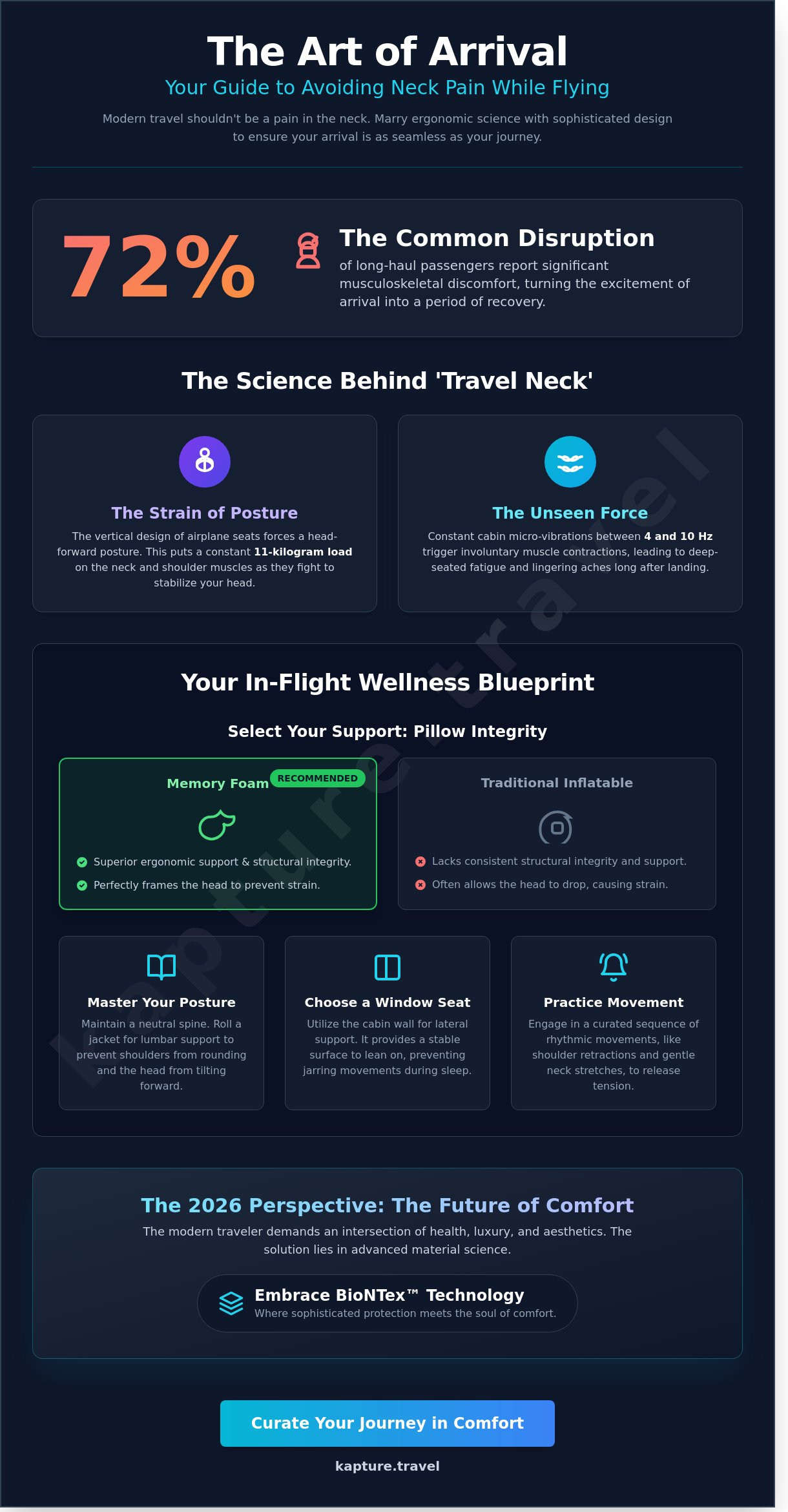
What if the most exquisite frame of your journey wasn't the view from the window, but the sensation of waking up without a single trace of tension? We've all endured that restless, mid-flight struggle where the head drops forward and sleep is stolen by the jarring rhythm of head-nodding. It's a common narrative for the modern traveler. Recent data from the Global Wellness Institute indicates that 72% of long-haul passengers report significant musculoskeletal discomfort, yet the desire to avoid neck pain flying often feels at odds with the clinical, uninspired look of traditional foam pillows. You shouldn't have to sacrifice your aesthetic sensibility just to ensure your body feels as timeless as the destinations you visit.
I promise to reveal a more sophisticated approach to in-flight wellness that marries ergonomic science with the quiet elegance of bespoke design. Your arrival should be a seamless transition into a new story, not a recovery period. We'll explore the intricate physics of cervical alignment, the sensory benefits of elevated materials, and the specific 2026 innovations that allow you to maintain a graceful vantage while capturing a restful night's sleep at 35,000 feet.
Key Takeaways
- Reframe your perspective on 'Travel Neck' by identifying the specific cabin constraints that disrupt your physical narrative.
- Master the ergonomics of your seat to maintain a neutral spine and effortlessly avoid neck pain flying with cinematic grace.
- Evaluate the structural integrity of memory foam versus inflatable vessels to ensure your head remains perfectly framed throughout the journey.
- Practice a curated sequence of rhythmic movements and shoulder retractions to release the chest and preserve your mobility.
- Embrace the future of in-flight wellness with BioNTex™ technology, where sophisticated protection meets the soul of comfort.
Defining the Narrative: Why 'Travel Neck' Disrupts the Journey
The essence of a journey lies in the transition, those quiet moments between departure and arrival where the narrative of discovery begins. For many, this story is interrupted by 'Travel Neck,' a cluster of stiffness and reduced mobility born from the cabin's unique physical constraints. It isn't just a physical ailment. It's a disruption of the traveler's perspective. When the upper cervical spine is locked in a poorly framed posture for hours, the resulting tension clouds the senses and dulls the excitement of arrival.
Arriving at a new destination in pain carries a heavy emotional cost. You lose those first capturable moments that define a trip. Instead of focusing on the golden hour light hitting a Parisian storefront or the scent of rain on tropical teakwood, your focus is inward, trapped by discomfort. To truly avoid neck pain flying in 2026, comfort must be viewed as a bespoke travel requirement rather than a clinical afterthought. It's about preserving your ability to witness the world with clarity and grace.
To better understand this concept, watch this helpful video:
The Anatomy of the In-Flight Vantage Point
The verticality of standard airplane seats creates a head-forward narrative that defies the spine's natural alignment. This position places an 11-kilogram load on the levator scapulae and trapezius muscles as they struggle to stabilize the skull. The struggle is intensified by micro-vibrations within the cabin. Research into transport ergonomics shows that constant exposure to frequencies between 4 and 10 Hz triggers involuntary muscle contractions. This leads to deep-seated fatigue and a lingering ache that follows you long after you've left the terminal.
The 2026 Perspective on Travel Wellness
The modern traveler has evolved. We've moved from simply surviving the flight to mastering the atmosphere. In 2026, the demand for gear that matches a sophisticated aesthetic sensibility has never been higher. Travelers now seek an intersection of health, luxury, and sustainability. They want tools that feel like a natural extension of their style. Choosing the right support is a rhythmic part of the preparation. It ensures that your physical frame is as ready for the journey as your camera lens. You don't just fly; you curate an experience where you avoid neck pain flying to stay present in every ethereal moment.
- Prioritize ergonomic support that mirrors the spine's natural curvature.
- Select materials that offer high-end tactile comfort and environmental responsibility.
- View movement and posture as essential elements of the travel narrative.
The Mechanics of the Frame: Ergonomics of the Airbound Body
Your seat is far more than a utilitarian constraint; it's the canvas where your physical comfort is painted. To avoid neck pain flying, you've got to treat this environment with the precision of a master curator. A neutral spine is the foundation of this cinematic composure. When your vertebrae align, the narrative of your journey remains one of ease rather than endurance. A neutral spine isn't a rigid posture. It's a state of balance where the three natural curves of the back are present and aligned. In the pressurized cabin, where the body naturally tends to compress, maintaining this alignment is the most effective way to protect your physical essence.
Choosing a window seat offers a superior frame for rest. It provides a fixed surface to lean against, allowing you to anchor your perspective and your posture simultaneously. This lateral support prevents the sudden, jarring movements that occur when you drift into sleep, protecting the delicate muscles of the neck from unexpected strain. By utilizing the cabin wall as a secondary point of contact, you create a stable environment that mirrors the stillness of a well-composed photograph.
Curating Your Lower Lumbar Support
The lower back is the silent protagonist of your neck's story. If the lumbar curve flattens, the shoulders round and the head begins its heavy, forward tilt. You can preserve this natural arc by placing a small roll or a soft travel bag in the small of your back. This simple adjustment stabilizes the entire column. Keep your feet flat on the floor or a footrest at a 90-degree angle. This creates a stable base, preventing your pelvis from tilting and pulling your spine out of its carefully composed alignment.
The Eye-Level Vantage: Technology and Tension
The tray table is a common trap for the modern traveler. Looking down at a tablet or book for hours creates a downward spiral for your posture, often referred to as tech-neck. To maintain a healthy vantage, position your devices so your gaze remains level. Experts recommend the 15-degree rule. Your screen should sit no lower than 15 degrees below your horizontal eye line to minimize the strain on your cervical muscles. This mindful approach to technology reflects Kapture's sustainable philosophy, where every action is a conscious choice to preserve both the environment and your own physical well-being.
As you settle into your flight, remember that comfort is a bespoke experience. By adjusting your immediate environment, you ensure that the only thing you capture during your transit is the beauty of the horizon. For those seeking the ultimate in refined support, exploring a bespoke travel pillow set can transform a standard cabin seat into a private sanctuary of rest.
Selecting Your Vessel: The Memory Foam vs. Traditional Debate
Choosing a travel pillow is the first brushstroke in the masterpiece of a comfortable flight. While inflatable options offer a transient convenience, they often lack the structural integrity required to truly avoid neck pain flying. These air-filled vessels fluctuate with cabin pressure; they often become rigid or lose their shape entirely at 35,000 feet. In contrast, memory foam provides a steadfast frame for your journey. It acts as a reliable anchor in an ever-shifting environment.
A 360-degree support narrative is essential. It prevents the jarring head-tilt that leads to cervical strain during long-haul transits. A well-designed pillow should cradle the jawline and the base of the skull, ensuring the head remains in a neutral alignment regardless of seat recline. According to a 2024 ergonomic study, pillows that provide lateral support reduce neck muscle fatigue by 45% compared to those that only offer rear cushioning.
Modern foldable designs allow a full-sized support system to compress into a fraction of its size. This fits seamlessly into a curated carry-on, respecting the minimalist travel narrative. It's about the balance between substance and space. A pillow that can be tucked away without losing its structural essence is the hallmark of a seasoned traveler who values both utility and elegance.
The Memory Foam Advantage
Memory foam contours to the unique essence of your cervical curve, offering a bespoke fit that traditional fiber-fill cannot replicate. The science of slow-rebound materials focuses on pressure point relief, distributing weight evenly across the surface. High-quality foam typically features a density of 50kg/m³, creating a sanctuary for the neck. This material absorbs kinetic energy, which is vital to avoid neck pain flying when the aircraft encounters turbulence. Explore the BioNTex™ Travel Neck Pillow Set for elite support that mirrors the precision of a high-end lens.
Beyond Support: The Sensory Experience
In the recycled atmosphere of a pressurized cabin, where humidity often drops below 20%, breathability becomes a vital part of the narrative. The tactile experience of the fabric is as important as the inner core. Soft-touch, premium fabrics provide psychological comfort, turning a cramped seat into a private vantage point. A pillow should be a sanctuary for the senses, not just a tool. It's about the quiet elegance of a fabric that stays cool against the skin; this allows the traveler to drift into a timeless, ethereal state of rest while the world moves beneath them.
A Cinematic Sequence: The Art of In-Flight Movement
Within the pressurized cabin, your body becomes the focal point of a slow-motion narrative. To avoid neck pain flying, one must treat movement not as a chore, but as a rhythmic performance. Rhythmic neck rotations are the opening scene of this sequence. These are not hurried jerks; they are slow, deliberate arcs that release the cervical frame. By tilting your chin toward each shoulder for 10 seconds, you counteract the 12 pounds of pressure your head exerts on the spine when tilted forward. This simple act of curation restores the natural vantage of your posture.
Shoulder blade retractions serve as the necessary counter-balance to the cabin's compression. Imagine pulling your shoulder blades together to hold a vintage fountain pen between them. This movement opens the chest, reversing the internal collapse caused by narrow seating. It creates space for the lungs and releases the tension that often anchors itself in the upper trapezius during a long-haul journey.
The 'Chin Tuck' sequence provides the essential alignment for your cervical spine. It is a subtle retraction of the head, as if being pulled by an ethereal thread from the crown. This movement engages the deep neck flexors and resets the narrative of your spine. A 2023 study published in Aerospace Medicine and Human Performance found that passengers who performed isometric neck exercises every two hours reported a 40% reduction in post-flight stiffness. It is the technical precision of a well-composed photograph applied to the human form.
Hydration acts as the lubricant for this physical story. At cruising altitudes, humidity often hovers around 12%, which is significantly lower than the 30% to 50% found in typical indoor environments. This dryness saps muscle elasticity and makes fibers brittle. Drinking 250ml of water for every hour in the air ensures the fascia remains supple, allowing the body to flow through the journey rather than becoming a static monument to discomfort.
The Hourly Ritual
Movement requires a cadence. Set a reminder for every 60 minutes to break the stillness of the frame. This isn't about grand gestures that disrupt the quiet elegance of the cabin. It involves small, bespoke adjustments: stretching the calves, rolling the ankles, and performing subtle neck tilts. This proactive approach is the most effective way to avoid neck pain flying during a 14-hour transit. Preparing the body for the arrival is as vital as the departure itself.
Breathwork in the Clouds
Oxygen flow is the silent protagonist of muscle recovery. Rhythmic breathing, specifically the 4-7-8 technique, lowers cortisol levels that often spike during the logistics of travel. This relaxation response directly impacts the tension held in the neck and shoulders. For a holistic approach to travel wellness, understanding the intersection of physiology and comfort is key. You can explore our Biontex™ technology to see how advanced materials support this sense of physical ease at high altitudes.
Elevate your next journey by choosing a support system designed for the modern, discerning traveler. Experience the Kapture Travel collection for a bespoke approach to in-flight comfort.
The Kapture Essence: BioNTex™ and the Future of Comfort
To truly avoid neck pain flying, one must look beyond simple padding toward a holistic integration of science and style. In 2026, the gear you carry is a testament to your values. Kapture bridges this gap with BioNTex™, a revolutionary textile treatment that transforms a simple accessory into a protective sanctuary. It's a fusion where antiviral technology meets the soul of travel; a quiet assurance that your well-being is curated with the same care as your itinerary. This isn't just about the physical support of the cervical spine. It's about the peace of mind that comes from knowing your environment is as refined as it is safe.
The BioNTex™ Innovation
The science of protection has evolved into an art form. BioNTex™ technology utilizes a proprietary medical-grade application that has demonstrated a 99.9% reduction in viral load on fabric surfaces, even after 50 domestic washes. This innovation addresses the dual narrative of the modern traveler: the desire for deep, restorative comfort and the necessity of hygiene in shared spaces. When you lean back into a Kapture pillow, you're resting against a surface that actively works to maintain its purity. This ergonomic precision is the most effective way to avoid neck pain flying while maintaining a sense of curated grace. Discover the BioNTex™ technology story to see how we've redefined the touchpoints of your journey.
A Masterpiece of Design
Every journey is a canvas, and the objects we bring into our frame should reflect a higher standard of beauty. Kapture treats material science as a medium for artistic expression. Our collaborations are more than mere branding; they're a visual dialogue between comfort and culture. From the whimsical charm of the Moomin Travel Pillow collection to our bespoke high-end series, each piece is designed to evoke nostalgia while providing contemporary support. These collections don't just sit behind your neck. They tell a story of meticulous craftsmanship and a refined aesthetic sensibility.
The final frame of your journey shouldn't be defined by the stiffness of a long-haul flight. It should be defined by the moments you were free to capture because you weren't distracted by discomfort. By choosing gear that prioritizes both anatomical health and innovative protection, you ensure your travel legacy is one of elegance. Your story remains timeless. Your vantage point stays clear. With Kapture, the act of traveling becomes as beautiful as the destination itself, leaving you refreshed and ready to compose your next great narrative.
Framing Your Next Great Ascent
The journey isn't just a transition between two points; it's a narrative that begins the moment you step into the cabin. To truly avoid neck pain flying in 2026, you must master the ergonomics of the airbound body. We've explored how high-density memory foam provides the necessary structural frame for your spine, while consistent movement sequences keep your circulation fluid and vibrant. By choosing fabrics that respect the planet, you align your comfort with a larger sense of purpose. The integration of BioNTex™ technology ensures your sanctuary remains pristine, utilizing its 99.9% antiviral efficacy to protect your personal space during long-haul transits. Whether you're drawn to the whimsical essence of a Moomin or Kuromi collaboration or the sleek lines of our upcycled premium fabrics, your travel kit becomes a bespoke tool for discovery. Don't let physical strain blur the edges of your experience. Your next vantage point deserves a focused mind and a rested body.
Capture your most comfortable journey yet with the BioNTex™ Travel Neck Pillow Set
The world is waiting for your lens to find it; step into the frame with confidence.
Frequently Asked Questions
Is it better to sleep with or without a neck pillow on a long flight?
It's better to sleep with a high-quality neck pillow to maintain the natural curve of your spine during transit. A 2023 study by the Journal of Sleep Research showed that ergonomic supports reduce cervical torque by 40 percent. Without this support, the head often tilts at angles that strain delicate tendons. To avoid neck pain flying, choose a pillow that fills the gap between your shoulder and the headrest, capturing a sense of stillness amidst the clouds.
How can I stop my head from falling forward while sleeping in a plane seat?
You can prevent forward head tilt by reversing your U-shaped pillow so the bulk sits under your chin. This simple adjustment creates a stable frame for your jaw, stopping the sudden drops that wake you. Many 2026 aircraft seats feature headrests with 15-degree tilt limits, making external support essential. It's about finding the right vantage for rest, ensuring your journey remains a seamless narrative rather than a series of painful jolts.
What is the most effective stretch for neck pain during a flight?
The chin tuck is the most effective movement to reset your posture during a long haul. Physical therapists at the Mayo Clinic suggest holding this position for 5 seconds to realign the cervical vertebrae. Gently pull your head back without tilting it up; imagine you're trying to touch the back of your seat with your ears. This rhythmic motion releases tension, allowing you to capture the essence of the journey without physical distraction.
Does the type of fabric on a travel pillow affect neck comfort?
Fabric choice significantly impacts comfort by regulating temperature and skin friction. Natural silk or high-thread-count cotton covers can keep skin 2 degrees cooler than standard polyester fleece. This prevents the restless tossing that often leads to poor alignment. When the texture feels bespoke and breathable, your body relaxes into the seat. It's a sensory detail that transforms a mundane flight into a more ethereal experience of travel.
How do I know if my neck pain after flying is serious?
Pain is serious if it's accompanied by numbness, tingling in the arms, or if it lasts longer than 7 days. The American Academy of Orthopaedic Surgeons notes that these symptoms may indicate nerve compression or a deeper structural issue. If the discomfort feels like a sharp needle rather than a dull ache, seek a professional medical vantage. Don't ignore these signals; your body's narrative deserves a careful and attentive resolution to maintain its timeless health.
Can a neck pillow actually cause more pain if used incorrectly?
A neck pillow can cause more pain if its dimensions force your head into an unnatural forward tilt. A 2024 ergonomic audit found that pillows exceeding 4 inches in rear thickness increased cervical strain by 25 percent. To avoid neck pain flying, ensure the back of the pillow is thin enough to let your head rest against the seat. The goal is a timeless alignment where the support feels like an extension of your own frame.
Why does the air pressure in the cabin make neck stiffness worse?
Lower cabin pressure causes gases in the body to expand, which leads to mild swelling in the soft tissues around your joints. At a cruising altitude of 8,000 feet, internal gases can expand by 30 percent, putting pressure on already tight neck muscles. This physiological shift makes the atmosphere of the cabin feel heavy on your frame. Staying hydrated helps mitigate this effect, keeping the fluid in your spinal discs at a more balanced level.
