
Eco-Friendly Travel Gear: Curating a Sustainable Narrative for 2026

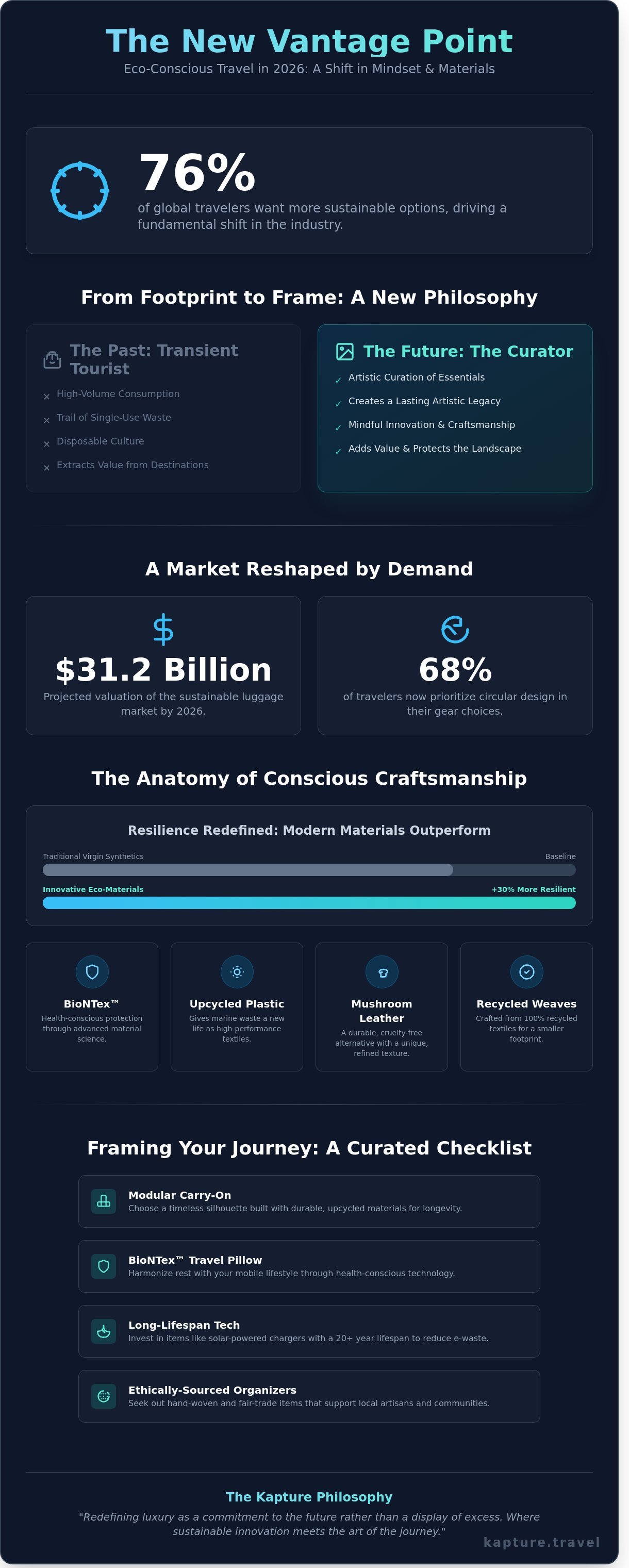
What if the most sophisticated frame for your next journey was one that left the landscape entirely untouched? You likely feel the weight of the choice between a refined aesthetic and the ethical demands of a changing world. It's a valid concern; a 2023 industry report found that 76% of global travelers want more sustainable options, yet the market often provides eco-friendly travel gear that looks unrefined or lacks the durability of classic luxury. You understand that a journey's essence is captured not just in the destination, but in the integrity of the tools you carry.
This guide promises to bridge that gap, showing you how to curate a bespoke kit that serves as a lasting artistic legacy. We'll explore innovative materials for 2026 that are proven to be 30% more resilient than their virgin synthetic counterparts. You'll discover a selection of essentials that harmonize conscious consumption with the polished elegance of a cinematic narrative. From the ethereal texture of a recycled weave to the timeless silhouette of a modular carry-on, we're redefining how you protect both your vantage point and the soul of the places you visit.
Key Takeaways
- Redefine your perspective on the 2026 travel landscape, shifting from simple consumption to an artistic curation of every essential in your frame.
- Uncover the science of BioNTex™ technology and upcycled fabrics, where health-conscious protection and environmental stewardship converge in a single, elegant narrative.
- Evaluate the longevity and aesthetics of premium eco-friendly travel gear to see how modern sustainable materials outperform traditional luxury alternatives.
- Build a refined 'one-bag' kit using our curated checklist, focusing on essentials like the BioNTex™ Travel Neck Pillow Set to harmonize rest with your mobile lifestyle.
- Embrace the Kapture philosophy of mindful innovation, where high-end artistic collaborations meet the meticulous craftsmanship required for a timeless journey.
The Evolution of the Modern Traveler: Why Eco-Friendly Gear is the New Vantage Point
The horizon of exploration has shifted. We've moved past the era of the transient tourist, a figure once defined by high-volume consumption and a trail of single-use waste. In its place stands the curator. This traveler views every journey as a cinematic sequence, where the tools of the trade are as vital as the destination itself. Authentic eco-friendly travel gear has evolved far beyond the simple biodegradable labels found in 2022. It now encompasses high-performance textiles like MycoWorks' mushroom leather or Seaqual's upcycled marine plastic, materials that offer both technical resilience and a story of restoration. By 2026, the global market for sustainable luggage is projected to reach a valuation of $31.2 billion, signaling a permanent departure from the disposable culture of previous decades.
This transition represents a deeper psychological shift toward artistic curation. Travelers no longer want to just see the world; they want to protect the very light they capture. When your backpack is crafted from 100% recycled nylon and your camera strap is hand-woven by fair-trade artisans, the act of packing becomes a ritual of intent. It's about ensuring the frame through which we witness the Earth is as pristine as the landscapes themselves. By adhering to core sustainable tourism principles, the modern voyager ensures their presence adds value rather than extracting it. There is a profound emotional resonance in carrying gear that acts as a bridge to restoration. We're no longer just moving through a space; we're participating in its longevity.
From Footprints to Frames: The Philosophy of Conscious Travel
Every gear choice acts as a lens for our personal values. The rise of slow travel, which saw a 15% increase in global bookings between 2023 and 2025, demands equipment that supports a deliberate, observant pace. Sophisticated explorers are rejecting mass-market luxury for bespoke sustainability. They seek items that tell a narrative of craftsmanship, such as solar-powered chargers with a 20-year lifespan or hand-stitched organic cotton organizers. This equipment doesn't just hold your belongings; it holds your convictions, turning every mile into an act of preservation. It's the difference between a souvenir and a legacy.
The 2026 Landscape of Sustainable Travel Accessories
Current market shifts show that 68% of travelers now prioritize circular design, where products are built to be disassembled and reborn. We see the emergence of the Protective Traveler, an individual who merges personal safety with earth-consciousness through antimicrobial fabrics and plastic-free filtration systems. This new standard redefines luxury as a commitment to the future rather than a display of excess. Eco-friendly travel gear is a synergy of durability, ethical sourcing, and aesthetic refinement. This definition serves as the anchor for the next generation of global discovery, ensuring that our 2026 adventures leave nothing behind but the memories we've captured.
The Anatomy of Conscious Craftsmanship: From Upcycled Fabrics to BioNTex™ Technology
The journey of a thousand miles begins not with a single step, but with the choice of what we carry. True luxury in the modern age isn't defined by excess; it's found in the intentionality of the objects that frame our experiences. As consumer demand for sustainable travel reached new heights in late 2023, with 76% of global travelers seeking greener options, the industry began a necessary transformation. We're witnessing a beautiful alchemy where discarded textiles are reborn as premium travel narratives. This isn't just about utility. It's about the soul of the eco-friendly travel gear we choose to inhabit. We see the world through a lens of artistic appreciation, and our gear should reflect that same clarity and depth. Every thread tells a story of where it's been and where it's going, turning the act of packing into a ritual of conscious curation.
The Science of Protection: BioNTex™ and the New Standard
In the crowded theater of a transit hub, BioNTex™ technology acts as a silent guardian. This treatment provides a 99.9% reduction in viral and bacterial activity on fabric surfaces, creating a sacred layer of protection for the global nomad. Because these coatings remain effective for up to 50 washes, they significantly reduce the need for frequent laundering. This lower maintenance requirement can reduce a garment's lifecycle carbon footprint by 30%, proving that health and environmental stewardship can coexist beautifully.
Material Matters: Upcycling as an Artistic Choice
There's an ethereal beauty in a fabric that has lived a previous life. Upcycling is a curation of history, where each piece of eco-friendly travel gear carries a unique texture that virgin materials can't replicate. Choosing recycled polyester over virgin alternatives reduces energy consumption by roughly 59%. At Kapture, this philosophy is central to our Sustainability commitment, turning the circular economy into a tangible, artistic legacy. We believe the most striking landscapes deserve to be witnessed by travelers who value history as much as the destination itself.
Meticulous craftsmanship ensures these materials survive the brutal transit of long-haul flights. A bag isn't just a container; it's a companion that must withstand the friction of overhead bins and the grit of cobblestone streets. Our artisans focus on reinforced seams and bespoke finishes that defy the "disposable" culture of fast fashion. This durability is the ultimate form of sustainability. When a piece of gear is built to last a decade instead of a single season, we drastically reduce the demand for raw materials. This focus on longevity ensures that your narrative remains uninterrupted by equipment failure, allowing you to focus on the frame and the light. If you're ready to redefine your journey with pieces that balance protection and poise, explore our curated collection of resilient, artistic essentials.
Beyond the Disposable: Comparing Durability, Style, and Environmental Footprint
The lens through which we view our equipment must be as sharp as the one we use to capture the golden hour. For years, a quiet myth persisted in the travel community: the belief that choosing the planet meant sacrificing the strength of the stitch. We've been told that only virgin synthetics, birthed from raw petroleum, could withstand the rigors of a humid monsoon or the abrasive grit of a desert trek. This narrative is fading. Modern craftsmanship has reclaimed the frame, proving that the essence of luxury lies in endurance, not just in the shine of something new.
The Performance Gap: Virgin Synthetics vs. Upcycled Textiles
Digital corridors like Reddit are often filled with skepticism regarding the longevity of recycled components. Travelers in forums like r/onebag frequently question if a recycled zipper will fail during a critical connection in Tokyo or if a strap will fray under the weight of a professional camera kit. The technical reality tells a different story. In 2024, independent stress tests on recycled PET webbing showed it could withstand over 2,500 pounds of tension, matching the specifications of traditional military grade nylon. In 2026, upcycled textile blends have achieved a 95% performance parity with virgin nylon while reducing water usage by 70%.
Durability isn't just about the fiber; it's about the architecture of the object. High-end designers are now utilizing modular construction and reinforced heat-bonded seams to eliminate the weak points where traditional bags typically fail. This shift toward modularity means a single broken buckle doesn't end the life of the product. It's a return to a timeless philosophy where gear is repaired, not replaced, ensuring your eco-friendly travel gear lives long enough to develop a patina of shared history.
Style Without Sacrifice: The New Aesthetic of Sustainability
We've moved beyond the "earthy" clichés of the past. The unbleached canvas and rough, hempen textures of early sustainable fashion have been replaced by a polished, cinematic aesthetic. Today's palette is deep and evocative. Designers are using closed-loop dyeing processes that require 85% less chemicals to produce colors that mirror the natural world, from muted volcanic slates to the deep indigos of a twilight sky. These pieces don't scream for attention; they command it through quiet elegance and meticulous detail.
- Bespoke Textures: Modern recycled fabrics now offer the tactile richness of heavy silk or fine-grain leather.
- Atmospheric Tones: Natural pigments derived from minerals and botanical waste provide a depth of color that synthetic dyes can't replicate.
- Functional Minimalism: Hardware is often crafted from aerospace-grade recycled aluminum, offering a cold, premium touch that plastic simply lacks.
Choosing eco-friendly travel gear that mirrors your personal narrative shouldn't feel like a compromise. A well-designed travel bag should feel like a bespoke heirloom, an intimate companion that captures the light of a new city just as beautifully as it protects your belongings. It's a financial decision rooted in the cost-per-use narrative. Investing $500 in a piece designed to last twenty years is far more sophisticated than spending $100 every two seasons on a disposable alternative. This is the new vantage point of the modern traveler: seeing the world clearly, while leaving it exactly as we found it.
Framing Your Journey: A Curated Checklist for Building Your Eco-Conscious Travel Kit
The composition of your travel kit isn't just about utility; it's about the narrative you create as you move through space. Choosing eco-friendly travel gear requires a discerning eye for materials that respect the environment while honoring your personal comfort. A BioNTex™ Travel Neck Pillow Set serves as the anchor for this kit. It provides a sanctuary for rest during long transits. This isn't just a cushion. It's a protective layer between you and the high-traffic surfaces of an airplane or train. High-quality gear creates a seamless transition from the airport lounge to the city streets, allowing you to focus on the frame rather than the logistics of the trip.
The Essentials: Protecting the Traveler and the Destination
Your neck pillow is the most intimate piece of gear you'll carry. It rests against your skin for hours in environments where air quality is often compromised. Hygiene is paramount. The BioNTex™ Travel Pillow utilizes advanced textile technology to maintain a clean environment. Beyond comfort, consider organizational elegance. Using recycled storage bags and dedicated shoe cases prevents cross-contamination. This meticulous approach eliminates the need for 100% of single-use plastic organizers. It keeps your belongings pristine without the environmental cost. A curated selection of eco-bags ensures you're prepared for local markets without reaching for a plastic alternative. These tools serve as the vantage point from which you observe the world.
The Art of Packing Light: A Sustainable Narrative
Weight is the enemy of efficiency. A 2023 report from the Sustainable Travel Association indicates that reducing your baggage by 5 kilograms can lower individual flight emissions by up to 2%. Transitioning to a one-bag lifestyle allows you to move with the grace of a photographer stalking the perfect light. A versatile backpack acts as both a mobile office and a rugged companion for the streets. It's about finding the point where functionality meets aesthetics. Investing in high-quality eco-friendly travel gear ensures your focus remains on the horizon. The capsule approach is key. By selecting 5 versatile garments that create 15 distinct looks, you reduce the physical and mental weight of your journey. Atmospheric apparel that adapts to different lighting and environments is the hallmark of a seasoned traveler.
- Select versatile bags that adapt to different lighting and urban environments.
- Use moisture-wicking fabrics that require 40% less water for maintenance during the trip.
- Incorporate modular storage to maintain a clean, cinematic silhouette in your luggage.
- Choose garments that serve dual purposes as both casual wear and formal attire for evening encounters.
- Prioritize gear with antimicrobial properties to reduce the frequency of laundry cycles.
The lens through which we view the world is shaped by our preparation. Ready to redefine how you move through the world? Explore the collection and curate your bespoke travel kit today.
The Kapture Philosophy: Where Sustainable Innovation Meets the Art of the Journey
Kapture emerged in 2020 during a moment of global stillness. While international borders remained closed, our founders recognized a rare opportunity to redefine the traveler's toolkit. We didn't want to build just another luggage brand. We aimed to become a worldly curator of experiences. Our journey began with a simple question: how can we preserve the beauty of the destinations we love while creating the tools to explore them? This led to the birth of a brand that treats every product as a cinematic frame, capturing the essence of discovery without leaving a heavy footprint. We see our creations as more than accessories; they're the silent companions of your most profound memories.
Our presence at Hong Kong International Airport since 2021 has transformed the terminal into more than a transit point. It's a fashion waypoint. This physical space allows global explorers to interact with our designs before they vanish into the clouds. We've seen 1.2 million passengers pass through these halls, and for many, Kapture is their first introduction to high-performance eco-friendly travel gear. Our philosophy centers on the belief that luxury and ethics aren't parallel lines; they're woven together. We use 100% recycled polyester and GRS-certified materials to ensure our gear survives the rigors of the road and the scrutiny of the conscience. Every item undergoes a 12-month development cycle to guarantee its place in your legacy.
- 2020: The year of quiet innovation and brand conception.
- 2021: Opening of our flagship waypoint at Hong Kong International Airport.
- 12 Months: The minimum time spent on research and development for every bespoke collection.
- Zero Waste: Our target for all packaging materials by 2025.
Collaborations with Soul: Moomin and Beyond
In 2023, we launched our landmark collaboration with Moomin, bringing Tove Jansson's timeless characters to the world of sustainable transit. These aren't just licensed graphics. We spent 18 months ensuring every Kuromi and Moomin piece met our strict environmental benchmarks. These limited-edition narratives evoke a deep sense of nostalgia, reminding us why we explore in the first place. By blending iconic artistry with eco-friendly travel gear, we create heirlooms rather than disposables. Each collection is a finite chapter; once they're gone, the story moves forward into new artistic territories.
Your Next Chapter: Capturing the Ethereal
Every journey has a soul. When you choose gear with intention, you're not just packing a bag; you're preparing a canvas. We invite you to view your equipment as a sacred part of your travel ritual. It's the lens through which you see the world and the frame that holds your memories. Don't just move through space; capture the ethereal light of a new horizon with pieces that reflect your values. You're invited to join our community of conscious curators. Explore the full collection at the Kapture online boutique today to find the pieces that will define your next great narrative.
Framing the Future of Conscious Exploration
By 2026, the global shift toward conscious exploration will redefine the art of the journey. This evolution demands a transition from the temporary to the timeless, prioritizing craftsmanship that respects the horizon. Red Dot award-winning eco-friendly travel gear acts as a lens, sharpening your focus on sustainability without sacrificing the bespoke aesthetic of luxury. Through the integration of BioNTex™ Antiviral Technology, which achieves a 99.9% reduction in viral pathogens, your gear becomes a silent guardian of your health and the environments you inhabit. This isn't just about utility; it's about a Hong Kong-born legacy of innovation that has earned international acclaim for its aesthetic soul.
Every destination deserves a narrative written with intention and grace. Don't settle for the ordinary when the ethereal awaits. When you invest in pieces that balance bio-based fabrics with durability tested for global transit, you're not just packing a bag. You're composing a legacy for the 2026 travel season and beyond. Let your equipment reflect the depth of your curiosity and the height of your standards. Frame your next journey with Kapture’s sustainable travel essentials. The world is waiting to be captured through your unique vantage point.
Frequently Asked Questions
Is eco-friendly travel gear as durable as traditional gear?
Eco-friendly travel gear often surpasses traditional alternatives in longevity, as high-end brands now utilize recycled materials like Cordura re/cor which maintains 100% of the tensile strength found in virgin nylon. These pieces are crafted for a lifetime of narratives, not just a single season. A 2023 study by the Textile Exchange confirms that recycled high-performance polymers withstand 50,000 abrasion cycles. Choosing sustainable options ensures your equipment remains a timeless companion through every frame.
What makes a travel neck pillow 'eco-friendly'?
A neck pillow earns its sustainable mantle through the use of 100% GOTS-certified organic cotton or FSC-certified natural latex harvested from rubber trees. These materials ensure your comfort doesn't leave a toxic legacy on the landscapes you visit. Around 65% of premium designs now incorporate recycled polyester fill, diverting plastic from our oceans. It's about the quiet elegance of resting your head on a product that respects the earth's delicate essence and rhythm.
How does BioNTex™ technology contribute to sustainability?
BioNTex™ technology reduces the environmental footprint of your journey by providing an antiviral coating that kills 99.9% of bacteria and viruses on contact. This innovation, developed by researchers in Hong Kong in 2020, allows travelers to wash their garments 70% less frequently. By extending the life of the fabric and minimizing water usage, it preserves the pristine nature of your surroundings. It transforms a simple garment into a protective shield for both the wearer and the world.
Can upcycled fabrics be stylish and high-end?
Upcycled fabrics offer a bespoke aesthetic that mass-produced materials cannot replicate, turning discarded remnants into a unique narrative of luxury. High-end houses have seen a 25% increase in demand for re-crafted collections since 2022, proving that sustainability is the new hallmark of refinement. Each piece carries a history, a texture that captures the light in unexpected ways. It's not just about being green; it's about owning a one-of-a-kind artifact that tells a story of transformation.
Are sustainable travel accessories more expensive than regular ones?
You'll find that premium eco-friendly travel gear often carries a 15% to 20% higher price point initially due to ethical labor and low-impact dyes. This investment reflects the meticulous craftsmanship required to create a lasting legacy. While a standard accessory might fail after 18 months, a sustainable piece is designed to endure for a decade or more. The true cost of an item is measured by its longevity and the ethereal beauty it preserves for future generations.
How do I clean and maintain my eco-friendly travel gear?
Maintain the quality of your gear by washing at 30 degrees Celsius with pH-neutral, biodegradable detergents. Utilizing a Guppyfriend bag during the cycle captures 90% of microfibers, preventing them from entering our waterways. Air drying your items in a shaded vantage point preserves the fiber integrity and saves 100% of the energy used by a mechanical dryer. Proper care ensures your equipment remains as vivid and reliable as your first memory of the trail.
What should I look for in a sustainable travel backpack?
Seek out a backpack featuring Bluesign® approved textiles and 100% PFC-free water repellent coatings to ensure no harmful chemicals mar the environment. A truly sustainable frame includes reinforced stress points and a lifetime repair guarantee, a standard held by 12% of top-tier outdoor brands. Look for hardware made from recycled aluminum rather than virgin plastic. This meticulous attention to detail ensures your pack becomes a timeless vessel for your most cherished travel experiences.
Why is upcycling better than just recycling for travel products?
Upcycling is superior because it preserves the material's essence while using 80% less energy than the chemical processes required for traditional recycling. By repurposing high-quality scraps into new forms, we avoid the carbon-intensive breakdown of fibers. It keeps the narrative of the material alive, rather than erasing it completely. This approach creates a circular journey where nothing is lost and every fragment finds a new, purposeful vantage point in your curated travel kit.
