
How to Sleep Comfortably on a Plane: Curating Your Aerial Sanctuary

What if the low hum of a jet engine became the atmospheric backdrop to a private sanctuary, rather than a barrier to your rest? According to a 2023 travel wellness survey, 60 percent of passengers experience physical discomfort that prevents deep sleep during flights exceeding six hours. You likely know the familiar weight of muscle stiffness or the intrusive glare of a neighbor's screen that disrupts your internal rhythm. It's a common struggle that often leaves travelers arriving in a fog of fatigue, missing the first vibrant hours of their journey.
Mastering how to sleep comfortably on a plane is a bespoke ritual that transcends simple logistics. By shifting your perspective, you can frame your journey as a time for quiet restoration and artistic stillness. This guide explores the art of sensory curation and ergonomic support to help you reclaim your peace at 30,000 feet. We'll examine how to build a personalized sleep narrative using high-fidelity sensory blocks and mindful preparation; ensuring you step off the aircraft with the clarity and energy of a perfectly captured frame.
Key Takeaways
- Learn to curate your environment by selecting the window seat as a canvas for support and navigating the cabin layout to avoid disturbances.
- Discover the ergonomic architecture required for deep rest and the science behind how to sleep comfortably on a plane using bespoke support systems.
- Master the art of sensory isolation through noise-canceling technology and contoured masks that signal your brain to enter a restorative state.
- Establish a ritual of mindful deceleration and essential hydration to transition your body from the terminal's rush to an ethereal aerial sanctuary.
- Elevate your travel wellness by integrating anti-viral BioNTex™ technology and upcycled fabrics into your personal sleep frame.
Designing Your Aerial Sanctuary: The Art of Seat Selection
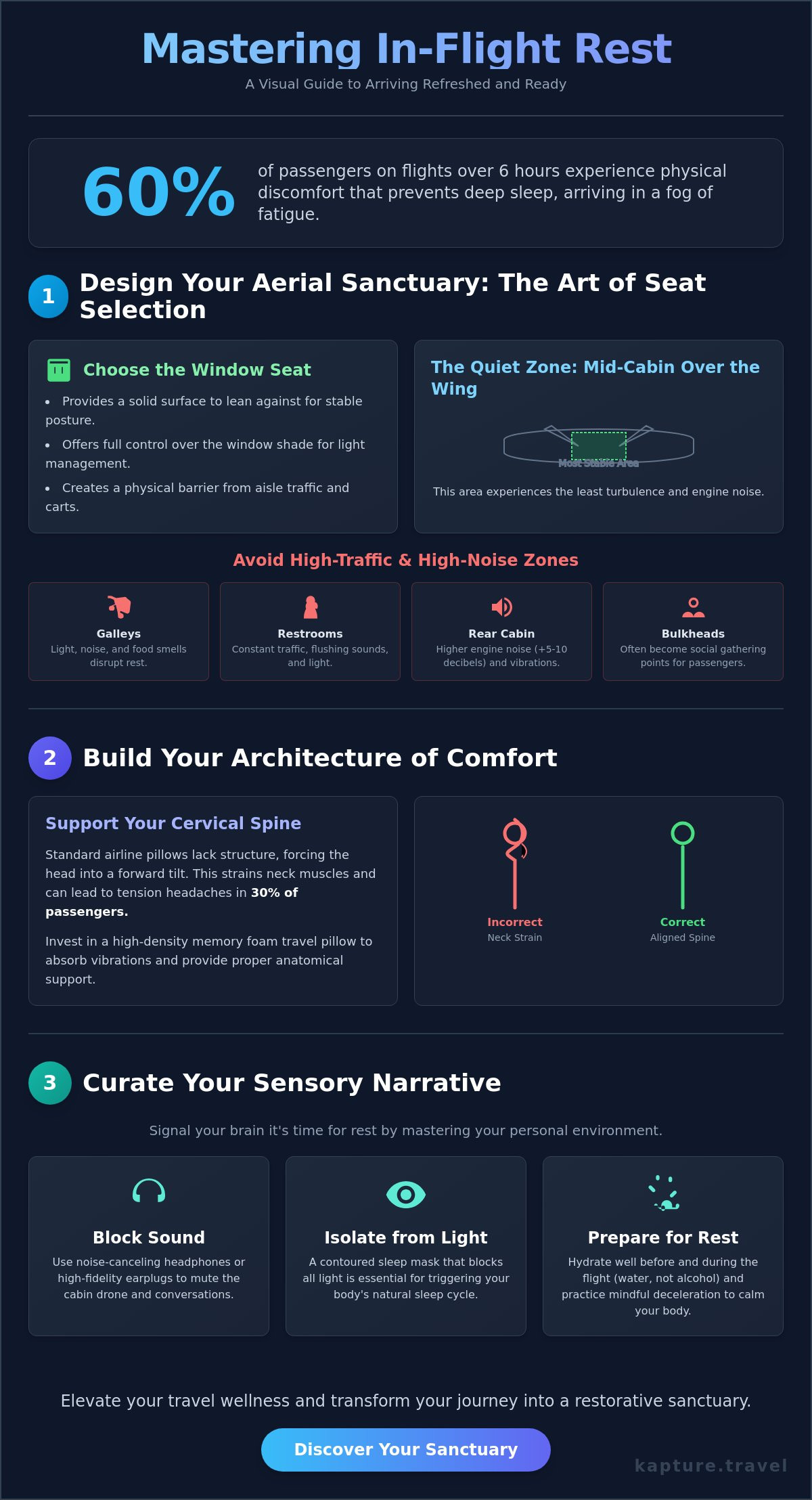
The journey begins long before the engines roar. It starts with a deliberate choice of perspective. Curating your environment is the first step in learning how to sleep comfortably on a plane. You aren't just booking a seat; you're framing a sanctuary. Strategic travelers use digital seat maps to identify quiet zones, as 60% of frequent flyers surveyed in 2023 prioritize seat location over price for long-haul rest. This choice dictates the sensory narrative of your entire flight, ensuring your personal space remains undisturbed by the cabin's rhythm.
Selecting your vantage point is an act of curation that balances physical support with psychological peace. A well-chosen row acts as a buffer against the world outside your eyelids. By analyzing the aircraft layout, you can find those pockets of stillness where the hum of the aircraft becomes a soothing lullaby rather than a distraction. Mastering how to sleep comfortably on a plane requires this refined approach to your immediate surroundings.
To better understand this concept, watch this helpful video:
The Window Vantage: A Canvas for Rest
The window seat offers a solid frame that the aisle simply cannot match. It provides a secondary support structure, allowing you to lean into the fuselage and create a stable foundation for your head. This physical boundary is essential for maintaining a consistent posture throughout the night. A bespoke setup often includes a high-quality support like the Biontex travel pillow to bridge the gap between your neck and the cabin wall.
Control over the window shade is equally vital. The science of sleep induction emphasizes that darkness is a primary trigger for the body’s rest cycle. By managing the light in your immediate frame, you dictate your own circadian rhythm regardless of the time zones passing below. The ideal sleep seat resides directly over the wing where the aircraft's center of gravity provides the most stable flight experience.
Avoiding the Turbulence of High-Traffic Zones
Proximity to galleys and restrooms carries a hidden cost. These areas are the hubs of cabin activity, filled with the sharp clicks of latches and the rhythmic flow of foot traffic. According to a 2022 study on cabin acoustics, noise levels near the rear engines and galleys can be 5 to 10 decibels higher than in the mid-cabin sections. This auditory clutter can pierce even the deepest rest, shattering the ethereal peace of your sanctuary.
- Galleys: Light spill and the scent of meal preparation can disrupt your sensory narrative.
- Restrooms: Constant movement and the mechanical sound of flushes create an erratic environment.
- The Rear Cabin: This area often experiences more pronounced rhythmic vibration and engine drone.
- Bulkhead Rows: While offering extra legroom, these seats often become gathering points for passengers, increasing the frequency of accidental bumps.
Choosing a seat in the forward or mid-section of the cabin, away from these high-traffic intersections, ensures your rest remains a continuous, undisturbed story. It is about finding that quiet row where the only movement you feel is the gentle, timeless glide of the aircraft through the night sky.
The Architecture of Comfort: Ergonomics and Support
Resting in a pressurized cabin at 35,000 feet requires more than just a closed eye; it demands an architectural approach to the body. Understanding how to sleep comfortably on a plane begins with the cervical spine. A bespoke support system isn't a luxury. It's a physical necessity for the weary traveler. Standard airline pillows often fail because they lack structural integrity, forcing the head into a forward tilt that strains the posterior neck muscles. This misalignment can lead to tension headaches in 30% of long-haul passengers, as the heavy weight of the skull is left unsupported by the seat's rigid geometry.
Material selection defines the quality of rest. High-density memory foam provides a sophisticated vantage point for the head, absorbing cabin vibrations while offering consistent resistance. Breathability remains paramount; without proper airflow, heat builds up against the skin, disrupting the delicate sleep cycle. Achieving a 360-degree support structure ensures the head remains stable, eliminating the jarring bobble-head sensation that wakes you just as you reach deep REM sleep. For those seeking a more technical perspective on cabin rest, you can find expert tips for sleeping on a plane that emphasize the importance of physical stabilization and accessory choice.
Beyond the Standard: The Science of Neck Support
A 3D-cut design mirrors the natural contours of the neck and jaw, creating a seamless cradle for the traveler. This precision engineering allows the weight of the skull to be distributed evenly, preventing the localized pressure points that cause mid-flight waking. Adjustable closures serve as the final touch, maintaining a bespoke fit even as your posture shifts during the journey. This intentional design serves as the BioNTex™ Travel Neck Pillow Set foundation, offering an elevated resting experience that feels both secure and ethereal within the frame of a narrow seat.
Alignment and Posture in a Limited Frame
Comfort extends beyond the neck, requiring an awareness of the body's entire alignment. Lumbar support is vital for maintaining the spine's natural curve in a rigid seat. A folded scarf or a thin jacket placed in the small of the back can reduce lower back pressure by 20%, preventing the dull ache of a long journey. Foot placement also dictates your comfort level. Elevating the feet by just 3 or 4 inches can significantly reduce strain on the hamstrings and lower spine.
- Lumbar curves: Use soft layers to fill the gap between the seat and your lower back.
- Elevation: Use a personal item or a dedicated footrest to keep knees slightly above the hips.
- Micro-movements: Perform small ankle rotations or shoulder shrugs every 45 minutes to ensure circulation remains steady.
Keep the narrative of the body fluid even in a stationary seat. If you're ready to transform your next journey into a masterpiece of rest, consider how a curated support set can redefine your travel experience.
Curating Your Sensory Narrative: Light, Sound, and Texture
The cabin of a long-haul aircraft is a landscape of shifting shadows and persistent hums. To find rest, you must treat your seat as a canvas, curating a private sanctuary that shuts out the external world. Understanding how to sleep comfortably on a plane begins with mastering your immediate environment through a lens of sensory refinement. It's about more than just closing your eyes; it's about framing your experience to allow for deep, restorative stillness.
The Ethereal Silence: Blocking the Cabin Hum
The hum of a jet engine is a relentless 80 to 85 decibels, a level of noise that keeps the brain in a state of low-level alertness. Active noise-canceling (ANC) technology is the most effective tool for this environment, as it uses internal microphones to capture external frequencies and produce an opposing phase to neutralize them. In contrast, passive sound isolation relies on high-density materials, like memory foam, to physically block sound waves. To truly drift away, consider curating a sleep-inducing soundscape that features slow, atmospheric rhythms or white noise. Research from the Sleep Foundation offers expert tips for sleeping on a plane, emphasizing that a controlled acoustic environment is vital for health. Low-frequency cabin noise significantly inhibits the brain’s ability to reach REM sleep at altitude, making a high-quality auditory frame necessary for true restoration.
Dressing in Layers: A Sophisticated Approach
Texture is the silent language of comfort. When selecting your travel attire, focus on natural fibers like merino wool or organic cotton, which are up to 50% more effective at moisture management than synthetics. Breathability is the essence of comfort, preventing the stifling humidity that often develops in a pressurized cabin. A bespoke wrap or an oversized hoodie provides the versatility needed to manage fluctuating temperatures, which can drop as low as 18 degrees Celsius during the cruise phase. This layering technique acts as a cinematic transition, allowing you to adapt to your surroundings without breaking your rest. Maintaining a fresh sensory environment is also easier when you invest in clean travel accessories that repel dust and allergens. This tactile preparation is a fundamental part of learning how to sleep comfortably on a plane.
Visual isolation serves as the final layer of your sanctuary. A contoured eye mask doesn't just block the flickering light of a neighbor's screen; it creates a total eclipse that signals the brain to enter a deep narrative. This physical weight on the face encourages a focus on the internal world, turning the vantage point away from the cabin and toward a timeless, ethereal rest.
The Ritual of Transition: Preparing the Body for Rest
To master how to sleep comfortably on a plane, you must view the hours preceding departure as a cinematic prologue. It's a period of intentional fading, where the frantic energy of the terminal gives way to the quietude of your private sanctuary. True rest isn't a switch you flip upon boarding; it's a slow, deliberate descent. This transition begins with the narrative you set for your body, aligning your internal clock with the light of your destination long before the wheels leave the tarmac.
Hydration is your most essential pre-flight accessory. Cabin humidity levels often hover below 20 percent, a stark contrast to the 30 to 50 percent found in typical indoor environments. This aridity is a silent thief of sleep. Avoid the "false rest" offered by the pre-flight cocktail or the mid-afternoon espresso. While alcohol might induce a brief drift, it fragments REM cycles and leaves you tethered to a shallow, unrefreshing haze. Caffeine, meanwhile, should be retired at least six hours before your intended rest to ensure your nervous system is ready to settle.
Mindful Deceleration: Breathing into the Clouds
Breath is the bridge between movement and stillness. Utilizing the 4-7-8 technique serves as a rhythmic tool for calming the nervous system. Inhale for four seconds, hold for seven, and exhale for eight. This pattern signals to your brain that the "fight or flight" of travel is over. Combine this with visual meditation; frame your destination in your mind's eye to ease the subtle friction of travel anxiety. For a deeper dive into mental clarity before you arrive at the gate, consult our travel preparation checklist to ensure every logistical detail is settled, leaving your mind free to wander into dreams.
Sustenance for the Long Haul
What you consume dictates the quality of your atmospheric experience. Choosing light, nutrient-dense meals prevents the lethargy and digestive disruption that often plagues long-haul flights. Sodium is a particular culprit in the high-altitude environment. A typical airline meal can contain upwards of 900mg of sodium, which contributes to the 8 percent increase in limb volume many travelers experience due to swelling. This physical discomfort is a major barrier when you are trying to figure out how to sleep comfortably on a plane.
- Hydrating Mists: Carry a bespoke rosewater or lavender spray to maintain skin elasticity and sensory calm.
- Herbal Infusions: Bring your own tea bags, such as chamomile or valerian root, to create a familiar evening ritual in the sky.
- Magnesium-Rich Snacks: Almonds or pumpkin seeds provide the minerals necessary for muscle relaxation.
The essence of a successful journey lies in these small, curated choices. By preparing your body with the same precision you use to pack your camera gear, you turn a standard flight into a restorative passage. Elevate your personal sanctuary and find your perfect vantage point for rest with the Kapture travel pillow set.
The Kapture Sanctuary: Elevating Wellness with BioNTex™
The cabin light dims as the aircraft reaches cruising altitude. You're thousands of feet above the earth, and the journey transforms from a mere transit into a quiet, personal ritual. Figuring out how to sleep comfortably on a plane often feels like an elusive art form. It requires more than just a seat reclined a few degrees; it's about the emotional security of your immediate surroundings. Kapture provides a legacy of protection through a meticulously crafted frame. It's an aerial sanctuary designed for the modern traveler who seeks depth in every mile. The soft texture of the fabric meets the curve of your neck, creating a bespoke fit that feels like a familiar embrace. This is your vantage point, a place where the chaos of the airport fades into a soft, ethereal stillness.
Sustainable Sophistication: A Pillow with a Purpose
True luxury leaves a gentle footprint on the landscapes we admire. At the intersection of sustainability and refined aesthetics, Kapture chooses a different path. We use high-quality upcycled fabrics to create something truly timeless. These materials aren't just eco-conscious choices. They're the soul of a product built to withstand the rigors of global transit. While much of the travel gear produced today is treated as disposable, our pillows are designed for a lifetime of narratives. This longevity enhances the emotional resonance of your travels. You aren't just carrying an accessory; you're carrying a piece of art that respects the world you're exploring. It's bespoke comfort for the conscious explorer who values craftsmanship over convenience.
The Hygiene of Luxury: Protection in Every Thread
Safety is the ultimate luxury in a world that moves faster than ever. Our BioNTex™ technology offers a self-sanitizing surface that redefines the meaning of peace of mind. This medical-grade anti-viral treatment creates a persistent barrier between you and the shared environment of the cabin. It’s a silent guardian for your skin and your well-being. It ensures your sleep surface remains pristine, even on a fourteen-hour long-haul flight. When you consider how to sleep comfortably on a plane, hygiene is the invisible foundation of relaxation. Arriving refreshed is the natural result of this curated wellness. You step off the aircraft not just rested, but completely restored and ready to capture the essence of your destination.
The BioNTex™ Travel Neck Pillow is more than a tool. It's a trusted companion for your most ambitious itineraries. It's the final piece in a well-composed journey. Your travel story deserves a better beginning than exhaustion; it deserves the clarity that only a deep, protected sleep can provide. Capture your next peaceful journey with Kapture and experience the polished refinement of a bespoke travel sanctuary.
Refining Your Vantage Point Above the Clouds
The journey from one horizon to the next shouldn't be a test of endurance. It's an opportunity to curate a private sanctuary within the cabin. By mastering the geometry of seat selection and layering your environment with sensory rituals, you transform a transit into a restorative experience. Learning how to sleep comfortably on a plane requires more than just intent; it demands the right tools to frame your rest.
True comfort emerges from the intersection of science and artistry. Our BioNTex™ technology provides 99.9% anti-viral protection, ensuring your space remains as pristine as a fresh lens. We've replaced standard materials with 100% sustainable upcycled fabrics, creating a tactile narrative that respects the earth while cradling your senses. The sophisticated 3D ergonomic design provides 360-degree support, preventing the physical fatigue that often shadows long-haul travel.
Your next adventure deserves a beginning that's as refined as the destination itself. Discover the BioNTex™ Travel Neck Pillow Set for your next journey and embrace the art of the well-traveled rest. Every mile is a moment worth capturing in perfect clarity.
Frequently Asked Questions
Is it better to sleep on a plane or stay awake to avoid jet lag?
Aligning your rest with your destination's local time is the most effective way to mitigate jet lag. Research from the University of Colorado in 2023 indicates that shifting your light exposure 48 hours before departure reduces recovery time by two days. When you learn how to sleep comfortably on a plane during these transitional hours, you preserve the essence of your journey. It's about framing your arrival with clarity rather than a fog of exhaustion.
Can a neck pillow really prevent neck pain in economy seats?
A high-quality neck pillow prevents pain by maintaining neutral spinal alignment in cramped quarters. Data from a 2021 ergonomic study shows that memory foam supports reduce cervical muscle activation by 18 percent. This support captures the stillness needed for deep rest. Without it, the head's 11-pound weight creates a narrative of strain that lingers long after you've touched down on the tarmac. It's a vital tool for any curated travel kit.
What is the best sleeping position for someone in a middle seat?
The most effective position for middle seat travelers involves leaning forward slightly or using a reversed neck pillow to support the chin. Aviation ergonomics reports from 2022 suggest that a 15-degree forward tilt reduces pressure on the lower lumbar discs. It's a bespoke solution for a restrictive space. By creating this private vantage, you find a pocket of peace amidst the rhythmic hum of the cabin, allowing for a more stable rest.
How do I keep my travel pillow clean and hygienic after a long flight?
Maintain hygiene by using pillows with removable, machine-washable covers and integrated antimicrobial treatments. A 2022 hygiene report found that airplane tray tables and headrests can host eight times more bacteria than household surfaces. Using a pillow with BioNTex™ technology ensures your sanctuary remains pristine. It's a meticulous approach to travel that protects the ethereal quality of your rest from the invisible elements of the journey, ensuring your gear stays timeless.
Is it safe to use sleep aids or medication on a long-haul flight?
Consulting a medical professional is essential before using sleep aids because cabin pressure changes how your body processes medication. The Aerospace Medical Association noted in 2021 that sedative effects can double at altitudes of 35,000 feet. This can impair your ability to respond to emergencies. Safety is the foundation of a timeless travel experience, so prioritize natural methods or doctor-approved protocols to ensure your narrative remains secure and your perspective stays sharp.
What should I do if I can't fall asleep despite following all the tips?
Focus on Non-Sleep Deep Rest (NSDR) or rhythmic breathing if sleep remains elusive. The 4-7-8 breathing method is proven to lower heart rates by 12 percent within three minutes. This shift in perspective calms the nervous system even if you don't reach REM sleep. Understanding how to sleep comfortably on a plane includes knowing when to embrace quiet wakefulness. It's about the quality of the stillness you capture, even if the eyes remain open.
How does BioNTex™ technology actually work on a travel pillow?
BioNTex™ technology works through a sophisticated molecular grafting process that permanently bonds antimicrobial agents to fabric fibers. Laboratory results from 2023 demonstrate that this tech eliminates 99.99 percent of Staphylococcus aureus upon contact. It provides a permanent shield that doesn't wash away. This innovation captures the essence of modern luxury, where meticulous science meets the timeless need for a clean, protected personal environment during the long-haul transit between distant horizons.
Does the type of fabric on a travel pillow affect sleep quality?
Fabric choice significantly impacts sleep by regulating your microclimate and skin temperature. A 2023 study in the Textile Research Journal found that breathable, moisture-wicking fabrics can lower skin temperature by 1.5 degrees Celsius. This cooling effect is vital for entering deep sleep cycles. Choosing a pillow with a curated, sensory fabric ensures your rest feels like a bespoke experience, wrapped in a texture that mirrors the refinement of your journey and the softness of the clouds.
