
The Art of Spatial Composition: How to Fold Clothes to Save Space in Luggage
What if your suitcase wasn't a container to be stuffed, but a frame for a carefully curated composition? For many, the act of packing is a frantic race against the clock. Yet, it's truly the first step of your journey. You likely recognize the quiet disappointment of arriving at a luxury destination only to find your favorite linen suit or silk dress marred by deep creases. Mastering how to fold clothes to save space in luggage is the essential secret to maintaining your aesthetic standards while navigating the world with ease. With major airlines now charging $45 for the first checked bag, the ability to compose a perfect carry-on has become both an artistic pursuit and a practical necessity.
We promise to guide you through the evocative craft of spatial arrangement, turning a chaotic pile of garments into a structured, elegant interior. You'll learn to treat every fabric with the respect it deserves; this ensures wrinkle-free arrivals and a sense of calm every time you unzip your bag. This guide explores the philosophy of the fold, providing you with a refined toolkit of techniques that maximize every linear inch. From vertical stacking to precision rolling, we'll show you how to create a suitcase that breathes, leaving plenty of room for the meaningful treasures you gather along the way.
Key Takeaways
- Reframe your packing process as a mindful ritual that transforms a simple suitcase into a well-composed travel narrative.
- Master advanced techniques like the Ranger Roll and KonMari to discover exactly how to fold clothes to save space in luggage while preserving the soul of your wardrobe.
- Learn the science of fiber memory and weight hierarchy to ensure structural integrity and a wrinkle-free arrival at your destination.
- Utilize specialized internal galleries and BioNTex™ technology to protect your pieces with a sophisticated layer of anti-viral security.
- Adopt a pre-departure visual audit to balance the weight and accessibility of your bag, ensuring every essential finds its perfect place.
The Philosophy of the Fold: Why Spatial Composition Matters
Packing is often dismissed as a chore, a frantic puzzle of physics. But for the discerning traveler, the suitcase is a canvas. It's the first physical draft of the journey ahead. When you master how to fold clothes to save space in luggage, you aren't just fitting items into a box. You are curating a mobile sanctuary. This process respects the integrity of your garments, ensuring that the delicate silk shirt or the sharp lines of a tailored blazer retain their structural soul. Every fold is a choice, a way to preserve the memory of the fabric before the journey even begins.
The evolution of travel has seen us move from the heavy, wooden trunks found in the history of baggage to the streamlined, lightweight shells of today. This shift demands a new kind of spatial literacy. It's an intersection of minimalism and deep preparation. By treating each fold as a deliberate stroke, you eliminate the friction of arrival. You replace the frantic search for a steamer with the quiet joy of a perfectly preserved wardrobe. To better understand this concept, watch this helpful video:
The Emotional Resonance of an Organized Journey
Travel begins long before the wheels leave the tarmac. It starts at the edge of the bed, where the noise of daily life is distilled into a few chosen pieces. This ritual of organization provides a profound psychological peace. It signals to the mind that the transition has begun. A meticulously organized suitcase is a promise of clarity. It allows you to move through the world with a sense of quiet elegance. Integrating advanced protection, such as BioNTex™ technology, into your packing strategy adds another layer of mindful preparation, shielding your curated wardrobe from the invisible elements of travel.
Visual Documentation: Packing for the Lens
Modern exploration is often a visual narrative. We pack not just for the climate, but for the light. Each outfit represents a scene in a cinematic story yet to be told. Visibility is the key to this composition. By using vertical techniques, you can see your entire wardrobe at a single glance. It's like looking at a contact sheet of your upcoming experiences. This optical clarity ensures you never lose a signature piece in the dark shadows of an overstuffed corner. It is about creating balance and perspective within the frame of your luggage, ensuring your style remains as sharp as your focus. Learning how to fold clothes to save space in luggage is the ultimate tool for the visual storyteller, allowing for a diverse wardrobe without the weight of excess.
Master Techniques: The Optics of Advanced Folding
If the philosophy of the fold is our theory, then these techniques are our practice. Mastering how to fold clothes to save space in luggage is an exercise in precision; it requires an eye for the interplay between fabric and volume. We move beyond simple compression. We seek a structural harmony that protects the garment while honoring the limits of the frame. These methods aren't mere logistics. They're the rhythmic brushstrokes of a seasoned traveler's narrative. By adopting a more cinematic approach to your suitcase, you ensure every piece arrives ready for its next scene.
Refining your process involves choosing the right method for the right material. While some fabrics demand the gentle embrace of a roll, others require the disciplined structure of a vertical stack. Integrating expert packing techniques into your routine allows you to navigate the world with a lighter footprint and a more polished aesthetic. It's about creating a sense of movement within a static space, ensuring your wardrobe remains as dynamic as your itinerary.
The Ranger Roll: Precision and Movement
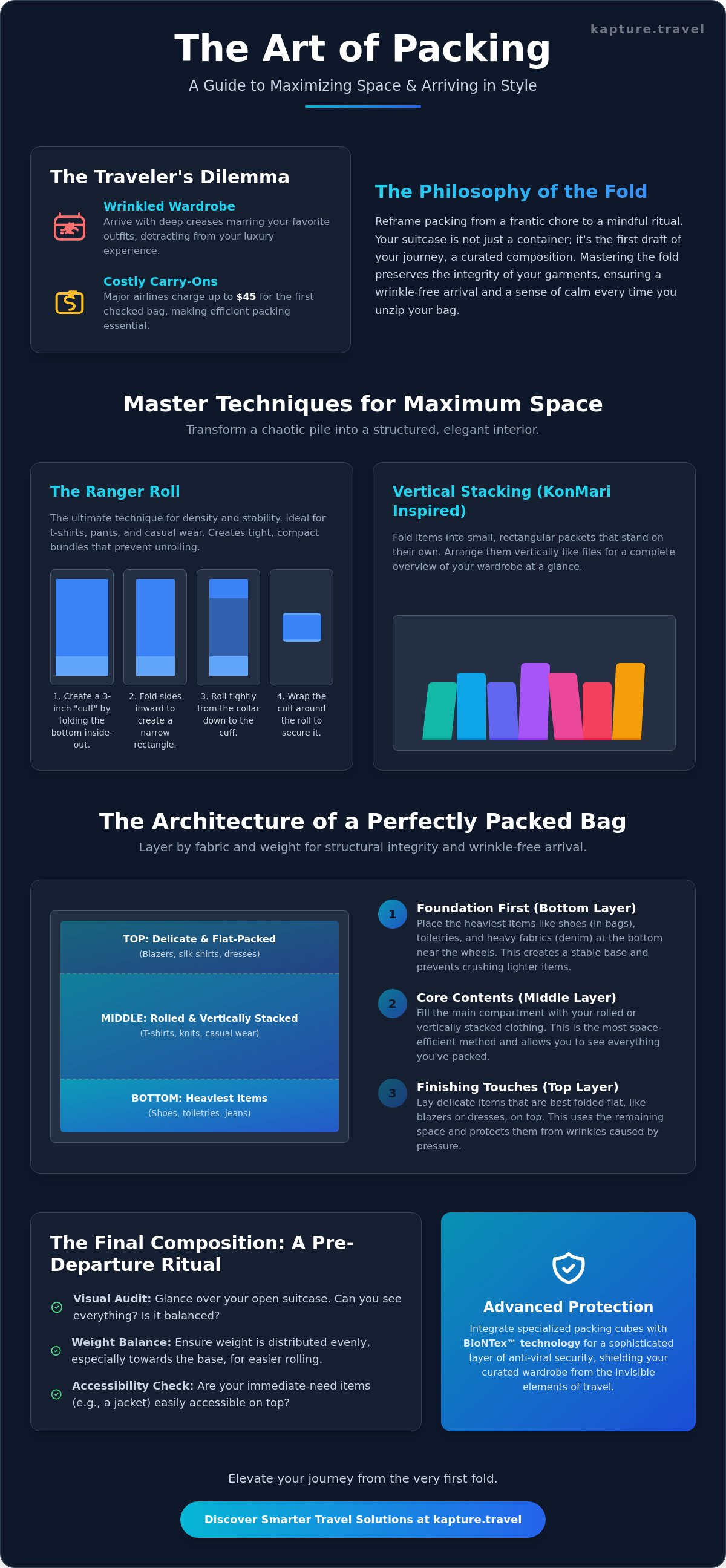
The Ranger Roll is the ultimate technique for the nomadic soul who values density without the chaos. It's a rhythmic process: fold the bottom of the garment inside out to create a "cuff," fold the sleeves inward to create a narrow rectangle, and roll tightly from the top down. Finally, tuck the roll into the cuff to secure it. This method is a masterpiece of efficiency for base layers, denim, and durable synthetic blends. It mirrors the flow of a journey where every inch is accounted for, providing a secure, cylindrical shape that resists unravelling during transit.
The Bundle Method: Protecting the Delicate
For your most cherished pieces, the bundle method offers a protective sanctuary. This technique involves wrapping garments around a soft central core to eliminate the sharp edges that cause deep-set wrinkles. You might use a soft item like a BioNTex™ Travel Neck Pillow Set as your structural heart. Layer your blazers and silk dresses outward, starting with the most wrinkle-prone items. This mimics the protective layers of a well-composed photograph, ensuring the "soul" of high-end fabrics remains untouched by the pressures of travel.
Vertical Folding: The KonMari Perspective
The KonMari method brings a sense of light and visibility to the interior of your bag. By folding items into small, sturdy rectangles that stand upright, you gain immediate visual access to your entire wardrobe. You no longer have to dig through layers to find a specific shirt; instead, you see a curated gallery of options. This verticality reduces the perceived weight of your luggage through sheer spatial efficiency. These organized rows fit perfectly into BioNTex™ Foldable Storage Bags, which add a layer of sophisticated protection to your meticulously arranged collection. Learning how to fold clothes to save space in luggage through verticality transforms your suitcase into an accessible, elegant archive of your personal style.
Material Science: Categorizing by Fabric and Weight
Every fabric possesses a silent memory. When we apply pressure or heat, we are essentially rewriting the story of that fiber. Understanding these physical properties is the secret to mastering how to fold clothes to save space in luggage. It's not just about volume; it's about structural integrity. A suitcase should be built like an architectural wonder. Place your heaviest, most resilient items at the base. Denim and heavy knits provide a stable foundation, preventing the delicate layers above from being crushed under their own weight. Texture also plays a critical role in this spatial arrangement. Rougher fabrics, such as wool or heavy cotton, act as natural anchors. They prevent silkier, more fluid garments from slipping into the dark corners of the bag during transit.
Many seasoned travelers find that using packing cubes categorized by weight and material creates a more stable composition. By isolating different textures, you maintain the "light vs. heavy" hierarchy throughout the journey. This is especially vital for upcycled and sustainable fabrics, which often feature unique weaves that require specialized care. These materials represent a commitment to sustainability, and their preservation is part of the journey's ethical and aesthetic narrative. Treating these pieces with respect ensures they continue to tell their story for years to come.
Natural Fibers and the Gentle Fold
Linen and cotton are the poets of the textile world. They breathe. They move. But they also remember every sharp crease. For these natural fibers, we prefer the "soft" fold. Avoid hard, pressed edges that can break the fiber's spirit. Instead, allow for small air pockets between layers. This prevents the fibers from setting into rigid, unsightly patterns. It preserves the tactile quality of premium travel apparel, ensuring that when you arrive, the fabric feels as alive and effortless as the destination itself.
Synthetic Resilience and the Power Roll
Modern performance fabrics offer a different kind of freedom. Their elasticity allows for a more disciplined, compact approach. This is where you utilize the power roll. By leveraging the resilience of synthetic blends, you can achieve incredible density without over-stretching the weave. However, there is a science to this compression. You must know when to push and when to let the garment breathe. Over-tightening can damage the technical properties of the fabric, leading to a loss of shape. It's a balance of force and finesse. By understanding the intersection of material and method, you ensure your wardrobe is as prepared for the journey as you are. Learning how to fold clothes to save space in luggage becomes a way to honor the craftsmanship of your clothes while embracing the efficiency of modern travel.
The Architecture of the Suitcase: Storage and Protection
If the fold is the rhythmic brushstroke of your travel narrative, then the interior of your suitcase is the gallery that preserves it. The architecture of your luggage dictates the longevity of your style. It's no longer enough to simply compress; we must protect. Understanding how to fold clothes to save space in luggage is only the first chapter of the story. The second chapter is about where those meticulous folds reside. By using packing cubes as internal galleries, you create a modular world where every garment has its own dedicated light and space. This structure prevents the shifting and crushing that occurs during the transition from one horizon to the next.
BioNTex™ Technology: A New Layer of Refinement
In the landscape of 2026 travel, protection has become the ultimate luxury. It's a quiet, invisible shield that allows you to explore with confidence. Integrating BioNTex™ technology into your spatial plan adds a layer of sophisticated refinement. These anti-viral storage solutions act as a sanctuary for your belongings, ensuring that the outside world remains separate from your curated interior. By incorporating these bags into your standard folding routine, you aren't just saving space; you're preserving the purity of your wardrobe. It's an intimate detail that speaks to a deeper level of care for your possessions.
The Foundation: Shoe Cases and Heavy Items
Stability is the bedrock of a well-composed bag. A grounded approach requires placing weight near the wheels to ensure effortless movement through terminals and cobblestone streets. Using BioNTex™ Foldable Shoe Cases allows you to keep your footwear isolated, protecting your silks and linens from the debris of the street. This bottom layer dictates the stability of the entire bag, providing a firm base for the more delicate compositions above. It's a technical necessity that mirrors the structural integrity of a well-designed building. When your foundation is secure, the rest of your wardrobe follows suit with an effortless grace.
Sustainability as a Design Choice
Every piece of gear you choose is a reflection of your commitment to the planet's future. The aesthetic appeal of upcycled fabrics and sustainable materials adds a layer of depth to your travel kit. It's about building a lasting artistic legacy through conscious selection. When you master how to fold clothes to save space in luggage within these eco-conscious boundaries, you prove that luxury and responsibility can exist in perfect harmony. Every journey becomes a statement of intent. Elevate your travel narrative and protect your meticulous folds with the BioNTex™ Foldable Storage Bag.
The Final Composition: A Pre-Departure Ritual
The zipper waits at the threshold. Before the final closure, engage in a visual audit. This is the moment where the logistics of packing transform into the art of preparation. You've spent time learning how to fold clothes to save space in luggage, and the results should reflect a balanced, rhythmic interior. Look at the composition. Is there a sense of harmony? Every piece should have its place, visible and respected. This audit is the final check of the lens before the shutter clicks. It ensures your travel narrative is clear and intentional.
The visual audit is a practice in mindfulness. It's about seeing the suitcase as a complete atmosphere. Notice how the light catches the edges of your vertical folds. Is there a specific item that feels out of place? This is the time to adjust the perspective. Think of it as the final edit of a well-told story. When the balance is right, the bag closes with a satisfying, effortless glide. This isn't just about saving space; it's about the psychological clarity that comes from knowing every essential item is valued and secured.
The Essential 'Outer' Layer
The BioNTex™ Travel Neck Pillow Set is the essential outer layer. It acts as a soft crown atop your meticulously arranged garments. In the cinematic flow of a journey, this set is the final punctuation mark. It provides a protective buffer for the delicate folds beneath while remaining within reach for the moment you transition to the cabin. Comfort shouldn't be an afterthought. By integrating this set into the top of your spatial plan, you ensure that the polished refinement of your arrival begins with a restful transit.
The Discerning Traveller's Final Check
Ergonomic refinement is the hallmark of the seasoned traveller. A bag that feels chaotic to carry will feel chaotic to live out of. Check the weight distribution. Ensure the center of gravity is low and stable. This prevents the awkward tilt that disrupts the elegance of movement through a terminal. Consider the atmosphere of the suitcase itself. A signature scent or a small, meaningful token adds a layer of intimacy to the interior. It transforms a collection of fabrics into a personal sanctuary.
Closing the bag is more than a logistical end. It's a moment of quiet reflection before the world opens up. You move forward with the confidence of a perfectly composed bag, ready for the raw excitement of discovery. Your mastery of how to fold clothes to save space in luggage has provided the freedom to focus entirely on the soul of the journey. For those seeking to further refine their preparation, adopting a sophisticated travel preparation routine is the final step in a lasting artistic legacy.
Step Into Your Next Chapter
The journey doesn't begin at the destination; it starts with the deliberate, artistic act of curation. You've explored the deep intersection of fabric and physics, transforming your suitcase into a structured gallery of future experiences. By understanding the silent memory of fibers and the precision of verticality, you've mastered how to fold clothes to save space in luggage while honoring the soul of your curated wardrobe. This meticulous preparation ensures that your arrival is as polished and evocative as your departure. It leaves you free to focus on the emotional resonance of the path ahead.
It's time to refine your travel kit with tools that match your aesthetic sensibility and worldly perspective. Discover the BioNTex™ Travel Collection and elevate your journey with protected, sustainable elegance. Our award-winning sustainable designs are artistically curated for the modern explorer. They feature BioNTex™ anti-viral technology to provide a quiet, invisible shield for your belongings. Embrace the world with a light footprint, a secure spirit, and a perfectly composed bag. Your next story is waiting to be told.
Frequently Asked Questions
Is it better to roll or fold clothes to save space in a suitcase?
Rolling is often the superior choice for casual garments like t-shirts and knitwear because it eliminates the air pockets found in traditional folds. This technique allows for a denser, more rhythmic arrangement within your bag. However, structured items like dress shirts or blazers benefit from a soft, deliberate fold to maintain their architectural integrity. Balancing these two methods is the essence of how to fold clothes to save space in luggage effectively.
How do I pack a blazer or suit jacket without it wrinkling?
The most sophisticated method involves turning one shoulder inside out and tucking the other shoulder into it, creating a protected, nested shape. This reduces the surface area while shielding the delicate outer fabric from friction. For additional security, place a soft item like a silk scarf inside the fold to prevent the fabric from collapsing. This ensures your tailored pieces arrive with their sharp lines and professional soul intact.
What is the best way to use packing cubes for maximum efficiency?
Treat your packing cubes as internal galleries where garments are curated by fabric weight or specific outfit narratives. By grouping similar textures together, you prevent heavy denim from crushing delicate silks. Use the vertical stacking method within each cube to ensure every piece is visible at a single glance. This systematic approach transforms your suitcase into a modular masterpiece of accessibility and order.
How can I prevent my shoes from dirtying my folded clothes?
Isolating your footwear is essential for maintaining a pristine suitcase interior. Utilizing BioNTex™ Foldable Shoe Cases provides a dedicated sanctuary for your shoes, keeping the outside world away from your linens. Position these cases near the wheels of your luggage to anchor the weight and provide a stable foundation. This simple ritual preserves the purity of your wardrobe throughout the long journey.
What clothes should never be rolled when packing?
Structured blazers, heavy wool coats, and crisp linen pieces should never be subjected to a tight roll. These materials possess a specific fiber memory that can lead to deep, stubborn creases when compressed into a cylinder. Instead, use a gentle fold or the bundle method to respect the natural drape of the fabric. Preserving the structure of high-end materials requires a soft touch and a refined spatial perspective.
How does BioNTex™ technology help when packing for long trips?
BioNTex™ technology provides a quiet shield of anti-viral protection that is vital for maintaining hygiene during extended travel. By using a BioNTex™ Foldable Storage Bag, you create a protected environment that resists the invisible elements often encountered in transit. This layer of refinement ensures your clothes stay fresh and secure, allowing you to focus on the emotional resonance of your discovery rather than the logistics of cleanliness.
Can folding techniques really help me avoid checking a bag?
Mastering advanced spatial composition can certainly help you bypass the $45 fee many airlines now charge for the first checked bag. Efficient folding allows you to fit a curated 8-day wardrobe into a single premium carry-on without sacrificing style. By maximizing every linear inch through techniques like the Ranger Roll, you achieve a level of density that traditional packing cannot match. It's a practical victory for the modern explorer.
What is the 'bundle' method of packing and when should I use it?
The bundle method involves wrapping your garments around a soft central core to create a tension-free environment. You might use a soft item like a BioNTex™ Travel Neck Pillow Set as your structural heart. This technique is ideal when you need to pack various layers of differing weights, such as a blazer over a silk blouse. It eliminates the sharp pressure points that cause wrinkles, making it perfect for itineraries that demand a mix of casual elegance and formal refinement.
