
Sleeping in Hong Kong Airport: 2026 Transit Guide

What if your eight-hour layover wasn't a test of endurance, but an invitation to a quiet, private sanctuary? Many travelers find themselves wandering the vast, illuminated concourse of Chek Lap Kok, wondering exactly how to sleep in Hong Kong airport without the physical toll of hard surfaces and public exposure. We understand the deep exhaustion that settles into your bones when the excitement of travel meets the sterile reality of a 24-hour terminal. It's possible to maintain your sense of personal luxury even in transit.
To secure high-quality rest, seek out the dedicated relaxation zones airside near Gates 23 or 60. Here, reclining chairs offer a reprieve from the upright world. For those prioritizing hygiene and absolute silence, a 3-hour lounge pass starts from $58 USD, while the Regal Airport Hotel provides a seamless transition to a private suite. This 2026 guide promises to elevate your experience from desperate floor-sleeping to a curated ritual of restoration. We will preview the most secluded quiet spots, explain the logistics of the HK$14 per hour luggage storage, and detail the essential tools needed to protect your well-being while you dream.
Key Takeaways
- Locate the most serene sanctuaries within the vast Terminal 1 and Midfield Concourse to escape the persistent hum of a 24-hour hub.
- Navigate the essential logistics of an overnight stay, from keeping transit documents ready to utilizing secure baggage facilities for uninterrupted peace of mind.
- Discover the specific rituals of how to sleep in Hong Kong airport by mastering sensory control and creating a private micro-environment amidst the transit flow.
- Prioritize your well-being with specialized travel essentials that provide ergonomic neck support and a protective antimicrobial shield against public surfaces.
- Evaluate the transition from free reclining chairs to the refined comfort of pay-in lounges to ensure you wake up refreshed for your onward journey.
Navigating the Quiet Corners of Hong Kong International Airport (HKIA)
The architecture of Hong Kong International Airport (HKIA) is a masterclass in scale and light. It's a 24-hour hub where the high-octane "Art of Departure" eventually yields to the silent, rhythmic necessity of rest. As the midnight hour passes, the terminal undergoes a profound atmospheric shift. The vibrant retail galleries of Level 7 quiet down, and the vast glass panes begin to reflect the soft, amber glow of the silent tarmac. Mastering how to sleep in Hong Kong airport begins with understanding the geometry of this massive complex. While Terminal 1 is the cinematic heart of the action, the Satellite and Midfield Concourses offer a more secluded perspective for the weary traveler.
To better understand the layout and visual atmosphere of these resting zones, watch this helpful video:
Level 7 is the grand stage for commerce and cuisine, but it's rarely the place for deep restoration. Level 6 is where the true sanctuary resides. By descending just one level, you move away from the residual hum of the food courts and into the steady stillness of the boarding gates. The air feels cooler here, and the lighting is often more deliberate, casting long, peaceful shadows that invite a moment of pause.
The Best Free Resting Lounges at HKIA
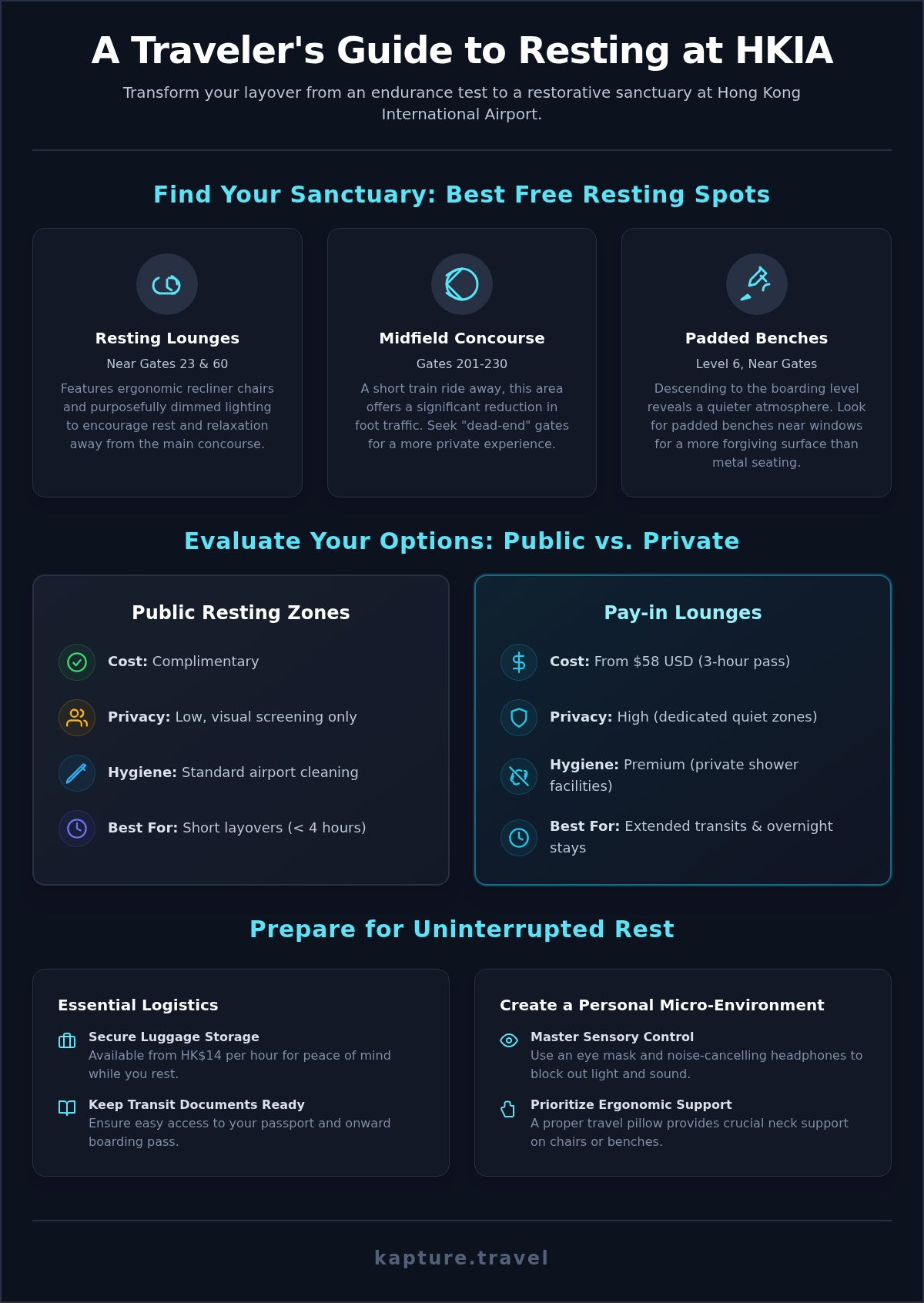
For those seeking a dedicated space without the price tag of a private suite, the Resting Lounges located near Gates 1-30 are essential. These zones feature ergonomic recliner seats designed for the human form in repose. They strike a fine balance between utility and comfort. The lighting in these specific alcoves is often dimmed to a soft "mood" illumination, providing a visual cue to the body that the journey has paused. It's a curated pocket of calm amidst the world's most efficient transit gallery.
Gate-Side Sanctuaries: Beyond the Main Lounges
If the main lounges are occupied, the Midfield Concourse (Gates 201-230) often provides a more intimate and quiet experience. It requires a short train ride, but the reward is a significant reduction in foot traffic. Seek out the "dead-end" gates. These are the corners of the airport where no flights are scheduled for several hours, creating a temporary private wing. When choosing your spot, focus on the tactile reality of your environment. Look for the padded benches near the windows. They offer a softer, more forgiving surface than the cold metal seating found in the high-traffic corridors, allowing you to settle into a deeper state of rest.
Evaluating Your Options: Public Spaces vs. Private Sanctuaries
The spectrum of rest in a 24-hour terminal is a study in light and shadow. You must decide whether to embrace the democratic openness of the concourse or retreat into the polished silence of a private sanctuary. Deciding how to sleep in Hong Kong airport often depends on the duration of your pause. A three-hour layover might only require a quiet gate, but a longer transit often demands the acoustic control of a dedicated suite. It's about balancing the raw excitement of the journey with the refined necessity of a well-earned rest.
To help you navigate this choice, consider the following comparison between the terminal's two primary paths to restoration:
| Feature | Public Resting Zones | Pay-in Lounges (Plaza Premium) |
|---|---|---|
| Cost | Complimentary | Starting from $58 USD (3-hour pass) |
| Privacy | Visual screening only | High (dedicated quiet zones) |
| Hygiene | Standard airport cleaning | Private shower facilities included |
| Best For | Short layovers (< 4 hours) | Extended transits or overnight stays |
The Premium Lounge Experience
Privacy is the ultimate luxury in a bustling hub. Pay-in lounges provide a level of acoustic control that the open terminal cannot match, casting a soft, protective veil over the noise of the concourse. If your layover exceeds six hours, the investment in a "Day Room" or a private suite becomes a matter of physical preservation. Before booking, consult the official airport facilities and services guide to locate the lounge nearest your departure gate, ensuring your transition back to flight is as seamless as your rest.
Curating Rest in the Public Terminal
If you prefer the freedom of the terminal, you must become an expert at assessing "sleepability." This involves more than just finding an empty bench; you need to observe the air conditioning flow to avoid direct drafts and check the proximity to restrooms to minimize ambient noise. There is a vibrant energy to the terminal, a sense of being part of a global movement, that lounges lack. However, the trade-off is a lack of protection from the environment and the bright glare of the concourse lights.
Discerning travelers often bridge this gap by adopting a "Personal Sanctuary" approach. By using the BioNTex™ Travel Neck Pillow Set from Kapture Travel, you can turn a public gate into a private suite. The EPP support prevents the physical toll of stiff seating, while the antiviral coating provides a 99% protective shield against public surfaces. For a deeper dive into the airport's unique character, explore The Art of Departure: A Discerning Guide to HKIA.
The Logistics of Airport Rest: Security, Luggage, and Timing
Understanding the legal landscape is the first step toward a restful transit. Hong Kong International Airport operates 24 hours a day, and passengers are permitted to stay airside overnight. It's a privilege of the modern traveler, provided you keep your boarding pass and travel documents within reach. Security personnel conduct routine checks, and a polite, prepared response maintains the seamless flow of the terminal's nocturnal life. Knowing how to sleep in Hong Kong airport isn't about hiding; it's about occupying the space with a sense of quiet authority and respect for the facility's 24/7 heartbeat. Peace of mind is the ultimate luxury.
Managing your belongings is essential for psychological comfort. If you're traveling with heavy carry-ons, the weight of responsibility can prevent deep sleep. The Left Baggage facility on Level 3 offers a sophisticated solution. At a rate of HK$14 per hour or HK$165 per day, you can liberate yourself from your luggage. This small investment buys you the freedom to move unencumbered toward HKIA's official list of Resting Lounges, where the environment is specifically tuned for repose. If you choose to keep your bags with you, use them as a tactile anchor to ensure you'd wake if they moved.
Security and Etiquette for the Discerning Sleeper
The unspoken rules of the concourse separate the seasoned traveler from the desperate. Avoid blocking main thoroughfares or occupying multiple seats in high-traffic zones. Instead, look for spots near 24-hour service desks or security posts. These areas offer a subtle layer of protection and quiet reassurance. Interacting with staff should always be professional and brief. A simple nod of acknowledgment goes a long way in establishing yourself as a respectful guest rather than a disruption to the terminal's operational rhythm.
Managing the Essentials: Power and Hydration
Before you drift off, attend to your "Power Islands." These dedicated charging stations are vital. Ensure your devices are at full capacity so you don't wake up to a dead phone and a missed connection. Hydration is equally critical in the dry, filtered air of the terminal. Locate the filtered water stations near the gate clusters to replenish your stores before settling in. Finally, use the "My HKG" app to set alerts for your flight. It allows you to track gate changes in real-time, turning your transition from sleep back to the gate into a calm, deliberate ritual rather than a frantic sprint. This level of preparation is the secret to how to sleep in Hong Kong airport while maintaining your composure.
Curating Your Personal Sleep Environment in a Public Space
Many travelers approach the prospect of rest in a terminal as a desperate act of survival. They surrender to the hard geometry of the floor or the cold metal of a gate-side chair. However, mastering how to sleep in Hong Kong airport requires a shift in perspective. It's an opportunity to curate a private micro-environment where sensory control and ergonomic integrity take precedence over the chaos of the concourse. By focusing on the three pillars of rest, you can transform a public transit hub into a temporary, high-quality sanctuary.
The first pillar is sensory control. The luminous intensity of HKIA is legendary, designed to keep the energy of commerce flowing at all hours. To counter this, a high-quality eye mask is non-negotiable. It creates an internal darkness that signals the brain to disconnect. Similarly, noise-canceling tools are essential to mask the rhythmic announcements and the distant hum of cleaning crews. When you manage the light and sound, you reclaim your personal space from the terminal's 24-hour cycle.
The Science of Ergonomic Support in Transit
Traditional "soft" travel pillows often fail because they lack structural integrity. When you're reclined in an airport chair, your neck requires consistent, firm alignment rather than mere cushioning. This is where materials like EPP (Expanded Polypropylene) prove their worth. EPP is exceptionally lightweight and durable, providing a level of support that memory foam cannot match. It holds its shape under pressure, ensuring your spine remains neutral. This ergonomic precision is what prevents the "travel hangover," that familiar sense of stiffness and fatigue that often follows a night spent in transit.
Hygiene as a Luxury: The Protective Shield
In a high-traffic hub like HKIA, the invisible reality of public surfaces can be a source of anxiety. True luxury is the peace of mind that comes from a clean environment. BioNTex™ technology addresses this by providing an antiviral coating that offers 99% germ protection. This coating remains effective for up to 100 washes, creating a durable barrier between you and the environment. It acts as a protective shield for the items that touch your face and neck, allowing you to settle into your rest without hesitation. To maintain this personal bubble, use foldable gear to keep your essentials organized and off the terminal floor.
Elevate your next transit experience by investing in a BioNTex™ Travel Neck Pillow Set, designed to provide the ultimate ergonomic and hygienic protection.
Elevating the Transit Experience with Specialized Travel Essentials
As the final hours of a long layover approach, the physical toll of the journey often becomes undeniable. You need more than just a quiet gate; you need a deliberate way to preserve your well-being and maintain your composure before the next boarding call. When you plan how to sleep in Hong Kong airport, the tools you carry define whether you wake up revitalized or simply exhausted. It's about moving beyond basic survival and embracing a curated approach to transit where protection meets polished style.
The BioNTex™ Travel Neck Pillow Set provides the structural integrity required for high-quality rest in a terminal environment. While many travelers rely on soft, shifting materials, Kapture Travel utilizes EPP, or Expanded Polypropylene. This material is exceptionally lightweight and durable, offering a steady, confident support that doesn't collapse over time. It ensures your neck remains neutral and supported, preventing the stiffness that often follows a night in a recliner or a gate-side chair. It is a sophisticated tool designed for those who value authentic craftsmanship and ergonomic precision.
Why BioNTex™ is Essential for Airport Surfaces
True luxury in a crowded hub is the intangible beauty of peace of mind. Our BioNTex™ Technology provides a 99% germ protection barrier that remains effective for up to 100 washes. This antiviral coating acts as a protective shield for the items that touch your face and neck, allowing you to settle into your rest without hesitating over the hygiene of public surfaces. Our commitment to a more conscious way of wandering is also reflected in our use of upcycled fabrics. This sustainable approach ensures your journey leaves a lasting legacy without an unnecessary environmental footprint.
The Ritual of Packing for Rest
Preparation is a slow, deliberate ritual that begins long before you reach the concourse. The BioNTex™ Foldable Travel Bag complements your setup, providing a seamless way to organize your essentials while keeping them protected from the terminal environment. As you prepare for your next HKIA transit, consider this curated kit an investment in your future self. By choosing gear that prioritizes health and ergonomic support, you ensure the story of your journey is one of restoration. Discover the BioNTex™ Travel Pillow Set and redefine your expectations for your next journey through the heart of Hong Kong.
Preparing for Your Next Horizon
The journey through Chek Lap Kok doesn't have to be a trial of endurance. By identifying the quiet alcoves of Level 6 and utilizing the terminal's sophisticated logistics, you've mastered the essential rituals of how to sleep in Hong Kong airport. True restoration comes from more than just finding a flat surface. It's about the deliberate curation of your immediate surroundings. When you move beyond the survival mindset, the terminal becomes a canvas for a more refined transit experience.
Your well-being deserves a protective shield that mirrors your aesthetic standards. The BioNTex™ Travel Neck Pillow Set provides this through its 99% germ protection and the lightweight, ergonomic support of EPP. This isn't just about comfort; it's about maintaining your sense of personal luxury in a high-traffic hub. Elevate your transit rest with the BioNTex™ Travel Pillow Set and ensure your next journey is defined by clarity and grace. Wander with confidence, knowing you're prepared for whatever the horizon holds.
Frequently Asked Questions
Is it free to sleep in Hong Kong Airport overnight?
Yes, it is entirely free to rest in the terminal overnight. Hong Kong International Airport remains open 24 hours a day, allowing passengers to stay airside without additional charges. While there are no fees for occupying public seating or dedicated resting zones, keep your boarding pass ready for routine security checks. This allows you to experience the terminal's atmospheric shift as it transitions from a retail hub to a quiet gallery of transit.
Where are the most comfortable free chairs in HKIA?
The most comfortable free seating is found in the dedicated Relaxation Zones. You can locate these sanctuaries near Gates 1, 23, and 60, as well as throughout the Midfield Concourse. These areas feature ergonomic recliners designed to support the body in a semi-reclined position. When considering how to sleep in Hong Kong airport, these spots offer a significant upgrade over the standard upright chairs found in the main boarding areas.
Does Hong Kong Airport have sleeping pods or cots?
Public sleeping pods are not currently available for passengers at HKIA. While social media posts once suggested the existence of low-cost pods, these facilities are reserved exclusively for airport staff. For those seeking a private bed, the Regal Airport Hotel is directly connected to Terminal 1, while Aerotel offers transit rooms within the restricted area. These options provide the acoustic control and physical privacy that a public concourse cannot replicate.
How can I stay warm while sleeping in the airport terminal?
Maintaining your internal warmth is essential because terminal temperatures are kept consistently cool. Use a sophisticated layering strategy with high-quality travel apparel or a compact blanket. The "airport chill" can be quite persistent during the quiet overnight hours when foot traffic slows. By preparing for this temperature shift, you can settle into a deeper rest without the distraction of the cold, filtered air moving through the vast, glass-walled spaces.
Are there showers available for transit passengers at HKIA?
Yes, transit passengers can access several shower facilities to refresh between flights. Free shower rooms are located on Level 5 near Gate 12 and on Level 6 near Gate 43. If you prefer a more premium environment, pay-in lounges like Plaza Premium offer high-pressure showers along with hot meals. This ritual of washing away the grit of travel is a vital part of waking up refreshed for your next flight.
Is it safe to sleep in the airport as a solo traveler?
It is exceptionally safe to sleep at HKIA due to the airport's 24/7 security presence and police patrols. Solo travelers often find quiet reassurance by settling near active service desks or security posts. While the environment is secure, it is always wise to use your luggage as a tactile anchor. Keeping your valuables close ensures you can rest with a steady sense of peace while the terminal's nocturnal operations continue around you.
Can I leave the airport during a layover to sleep in a hotel?
You can leave the airport to stay at a hotel if you meet the entry requirements for Hong Kong. The Regal Airport Hotel is a refined choice that is connected to the terminal by a covered walkway. Alternatively, several hotels in the nearby Tung Chung area offer shuttle services. This is a practical solution for layovers exceeding eight hours, providing a seamless transition from the high-energy terminal to the polished quiet of a private suite.
What should I pack in my carry-on for an airport sleepover?
Your carry-on should contain a curated kit for sensory control and ergonomic support. Include a high-quality eye mask, noise-canceling tools, and the BioNTex™ Travel Neck Pillow Set. The EPP material provides the firm alignment your neck needs during upright rest, while the antiviral coating acts as a protective shield against public surfaces. This kit turns a simple layover into a curated experience of restoration, ensuring you arrive at your destination with a clear perspective.
